


What's Happening?
A recent study led by the André E. Lalonde National Facility for Accelerator Mass Spectrometry (AEL-AMS) at the University of Ottawa has found that the radiocarbon legacy of Cold War-era nuclear weapons testing has only recently disappeared from the local
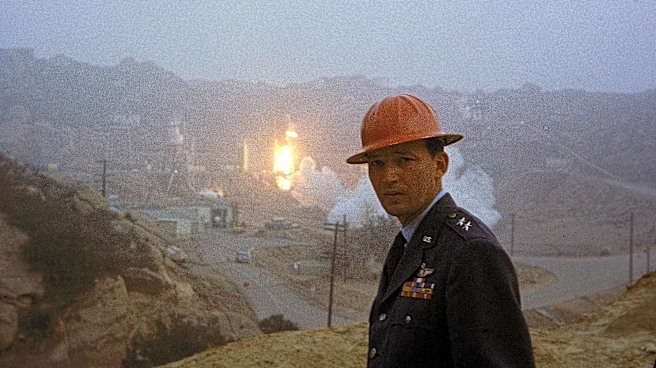
biosphere in Gatineau Park. For over six decades, scientists have collected sugar maple leaves from the park, creating the longest continuous record of its kind. This research, published in Scientific Reports, analyzed these leaves, which act as a 65-year diary of the atmosphere. Above-ground nuclear tests conducted primarily by the United States and the Soviet Union in the late 1950s and early 1960s released significant amounts of radiocarbon, roughly doubling global levels in what scientists call the “bomb pulse.” The study indicates that while direct air measurements showed atmospheric radiocarbon dropping below pre-bomb levels around 2021–2022, local maple leaves only crossed this threshold in 2024, demonstrating a lag in biological systems.
Why It's Important?
This research provides a more accurate understanding of how plants absorb and store carbon, which has significant implications for environmental science and historical climate reconstruction. The finding that plants do not build new growth entirely from carbon absorbed in the same year, but also draw on stored carbon from previous growing seasons, refines the interpretation of radiocarbon measurements. This improved accuracy is crucial for studies that use tree rings and preserved plant material to reconstruct past atmospheric conditions, including those related to climate change and historical environmental impacts. For U.S. scientists and policymakers, this methodology can enhance the precision of environmental monitoring and historical data analysis, potentially influencing future research into long-term environmental contamination and recovery from atmospheric events.
What's Next?
The ongoing collection of maple leaves in Gatineau Park will continue to extend this unique dataset, providing further opportunities for research into atmospheric changes and plant physiology. The refined understanding of how leaves track atmospheric radiocarbon, including the identified 2.2-year lag and a small positive offset, will enable scientists to interpret historical radiocarbon data with greater precision. This will lead to more accurate reconstructions of past atmospheric conditions from various plant materials. Future research may explore how these findings apply to other plant species and ecosystems, potentially leading to a broader re-evaluation of existing radiocarbon-based environmental studies and informing new methodologies for environmental monitoring.
Beyond the Headlines
The study highlights the long-lasting environmental footprint of historical events like Cold War nuclear testing, demonstrating that the effects can persist in biological systems for decades after the initial impact. This underscores the complex and delayed nature of environmental recovery from large-scale atmospheric disturbances. The research also touches upon the intricate mechanisms of plant carbon assimilation, revealing that plants utilize stored carbohydrates, which can buffer the immediate effects of atmospheric changes. This deeper insight into plant metabolism has broader implications for understanding ecosystem resilience and how biological systems adapt to and record environmental shifts over time, offering a nuanced perspective on the interplay between human activities and natural processes.