

What's Happening?
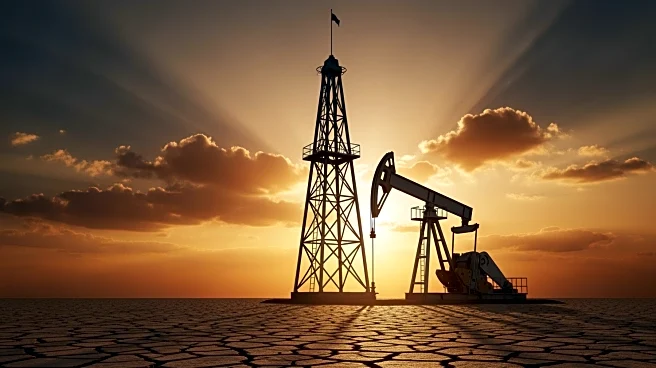
Following the capture of Venezuelan President Nicolás Maduro by U.S. military forces, President Trump has announced plans to involve major U.S. oil companies in Venezuela's oil sector. Venezuela, once a leading global oil producer and a founding member
of OPEC, now produces significantly less oil due to mismanagement and sanctions. President Trump aims to revitalize Venezuela's oil infrastructure, which has deteriorated over the years, and increase production. This move comes as the global oil market faces an oversupply, with prices below $60 a barrel. Despite Venezuela's vast oil reserves, its heavy and dense crude is among the most environmentally damaging to produce. U.S. oil companies have a complex history in Venezuela, with past disputes over contract renegotiations leading to international arbitration and significant financial claims against the Venezuelan government.
Why It's Important?
The potential re-entry of U.S. oil companies into Venezuela could have significant implications for the global oil market and U.S. energy interests. Venezuela's oil reserves are among the largest in the world, and increased production could influence global oil prices. However, the environmental impact of Venezuela's heavy crude and the current global shift towards renewable energy sources may affect the attractiveness of this venture. Additionally, the political stability of Venezuela remains uncertain, which could pose risks for U.S. companies considering investment. The situation also highlights the geopolitical dynamics in Latin America, where U.S. interventions have historically faced challenges.
What's Next?
The future involvement of U.S. oil companies in Venezuela will depend on several factors, including the political stability of the country and the resolution of past financial disputes. Companies like ConocoPhillips and ExxonMobil, which have outstanding claims against Venezuela, may see this as an opportunity to recover losses. However, the current global oil surplus and environmental concerns may deter immediate large-scale investments. The Trump administration's ability to stabilize the political situation in Venezuela will be crucial in determining the success of these plans. Additionally, the response from other oil-producing nations and international stakeholders will be important in shaping the outcome.
Beyond the Headlines
The situation in Venezuela raises broader questions about the ethics of foreign intervention in resource-rich countries and the environmental responsibilities of oil companies. The potential for increased oil production in Venezuela contrasts with global efforts to reduce carbon emissions and combat climate change. Furthermore, the historical context of U.S. interventions in Latin America adds a layer of complexity to the current developments, as past efforts have often led to long-term instability and economic challenges in the region.