







What's Happening?
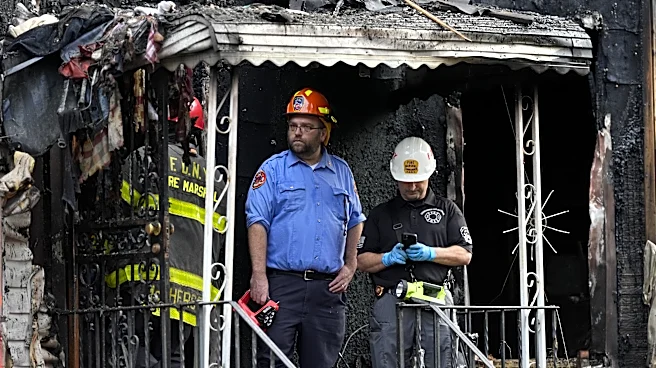
New York City has seen a significant increase in lithium-ion battery fires, with 401 incidents reported by late October 2026, compared to 292 in all of 2025. These fires have resulted in 74 injuries and six fatalities in 2026. Two recent incidents highlight
the danger: a Bronx apartment fire on October 28, caused by an e-bike battery, killed four family members, and a Brooklyn house fire on November 5, where a lithium-ion battery was found, killed six people and injured seven, including three firefighters. Fire Commissioner Lillian Bonsignore noted that this surge reverses a previous decline in battery fire deaths. The International Association of Fire Fighters (IAFF) is advocating for stronger safety standards, including a national lithium-ion battery safety framework in Canada and supporting legislation in the U.S. to mandate safety rules for micromobility device batteries.
Why It's Important?
The escalating number of lithium-ion battery fires poses a critical public safety threat in urban environments across the U.S., particularly in densely populated areas like New York City. These fires are exceptionally dangerous due to their rapid spread, intense heat, and the release of toxic gases, making them difficult for firefighters to control and increasing risks for both residents and emergency responders. The incidents underscore the urgent need for comprehensive safety regulations and public awareness campaigns regarding the proper use, charging, and disposal of these batteries. The IAFF's push for national safety frameworks highlights a gap in current regulatory oversight, which, if addressed, could prevent further casualties and property damage. The economic impact includes property losses, increased emergency response costs, and potential strain on healthcare systems due to injuries.
What's Next?
In the U.S., two legislative efforts are underway to address lithium-ion battery safety. The 'Setting Consumer Standards for Lithium-Ion Batteries Act,' supported by the IAFF, has passed the House and awaits a Senate vote. This bill aims to mandate safety rules for batteries in e-bikes, e-scooters, and other micromobility devices. Additionally, the Consumer Product Safety Commission (CPSC) proposed a mandatory standard for micromobility batteries and their electrical systems in June, with a decision pending after the comment period closed. New York City has already implemented Local Law 39 since September 2023, banning the sale of uncertified e-bikes and batteries, which initially led to a decrease in fatalities. However, the recent surge indicates that further measures, including public education on safe charging and storage practices, are crucial to sustain progress and mitigate risks.
Beyond the Headlines
The rise in lithium-ion battery fires points to broader societal implications tied to the rapid adoption of new technologies. The convenience and environmental benefits of e-bikes and other battery-powered devices are undeniable, but the lack of robust safety standards and consumer education creates a significant public health and safety challenge. This issue highlights the tension between technological innovation and regulatory adaptation. The IAFF's call for a national database to track these fires underscores a critical data gap, which, if filled, could inform more effective policy-making and resource allocation. Furthermore, the danger posed to firefighters by these intense and toxic fires raises concerns about occupational safety and the need for specialized training and equipment, potentially leading to increased investment in fire department resources and research into new suppression technologies.