
What's Happening?
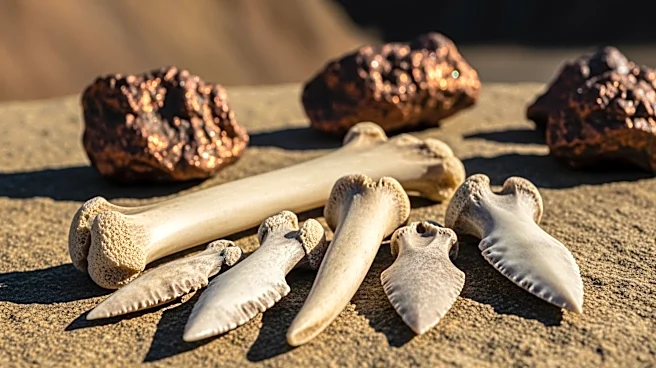
A recent study has uncovered that Bronze Age Britons continued to use animal bones as tools for copper mining, even after the advent of metal-working. Researchers analyzed 150 bone artifacts from the Great
Orme copper-mining complex in North Wales, revealing that these bones were deliberately shaped for specific mining tasks. The study, conducted by Olga Zagorodnia and Harriet White, found that bones were used alongside metal tools for tasks such as splitting soft, copper-bearing rock. This practice spanned at least nine centuries, indicating a diverse and adaptable toolkit in Bronze Age Britain.
Why It's Important?
The findings challenge the assumption that metal tools completely replaced bone tools during the Bronze Age. The continued use of bone tools suggests a practical understanding of material properties and a flexible approach to technology. This discovery highlights the resourcefulness of Bronze Age communities, who utilized readily available materials to complement metal tools. The study also provides insights into the organized mining practices of the time, suggesting the presence of specialized tools and skilled workers. These findings contribute to a deeper understanding of technological evolution and resource management in ancient societies.
Beyond the Headlines
The use of bone tools alongside metal ones reflects a long-standing technological tradition that predates metal-working. This practice underscores the adaptability of ancient societies in utilizing available resources efficiently. The study also parallels findings from other prehistoric mining sites in Europe, indicating a broader pattern of technological continuity. The research emphasizes the importance of studying ancient tools to understand the transition from the Stone Age to the Metal Age, offering valuable perspectives on human innovation and adaptation.