





What's Happening?
Researchers have developed a compact imaging system using a single-layer metalens that can simultaneously capture full-Stokes polarization and quantitative phase information. Traditional imaging techniques often require complex setups and are limited
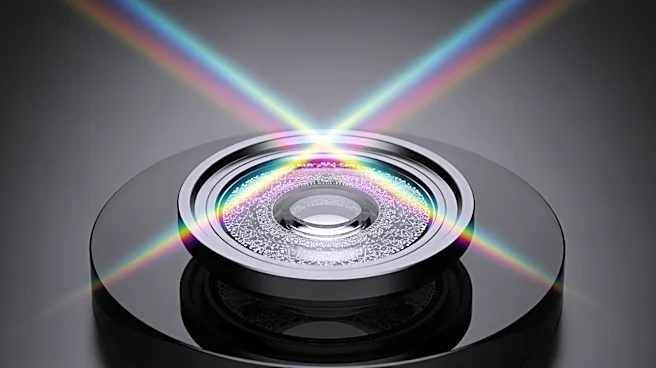
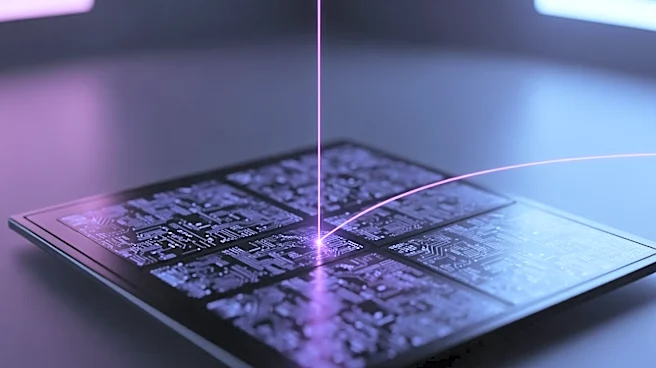
by low temporal resolution. The new system employs a metalens to project light onto distinct regions of a polarization camera, allowing for the decoding of intensity, phase, and polarization information. This innovation addresses the limitations of conventional methods by providing a more efficient and compact solution. The metalens design includes isotropic and anisotropic nanopillars that facilitate the separation of polarization states, enabling comprehensive imaging capabilities.
Why It's Important?
This advancement in imaging technology has significant implications for fields requiring detailed optical analysis, such as biomedical imaging and material science. By simplifying the imaging process and reducing equipment bulk, the new system could enhance the efficiency and accuracy of research and diagnostics. The ability to capture comprehensive optical data in a single shot can accelerate data acquisition and analysis, potentially leading to faster scientific discoveries and innovations. Industries that rely on precise imaging, such as healthcare and manufacturing, stand to benefit from improved diagnostic tools and quality control processes.
Beyond the Headlines
The development of this metalens technology could lead to broader applications in various scientific and industrial fields. Its compact design and efficiency may inspire further innovations in optical devices, potentially influencing the future of imaging technology. The integration of such advanced systems into everyday applications could democratize access to high-quality imaging, making it more accessible to smaller research institutions and companies. Additionally, the technology's potential to enhance real-time monitoring and analysis could transform practices in fields like telemedicine and remote sensing.