








What's Happening?
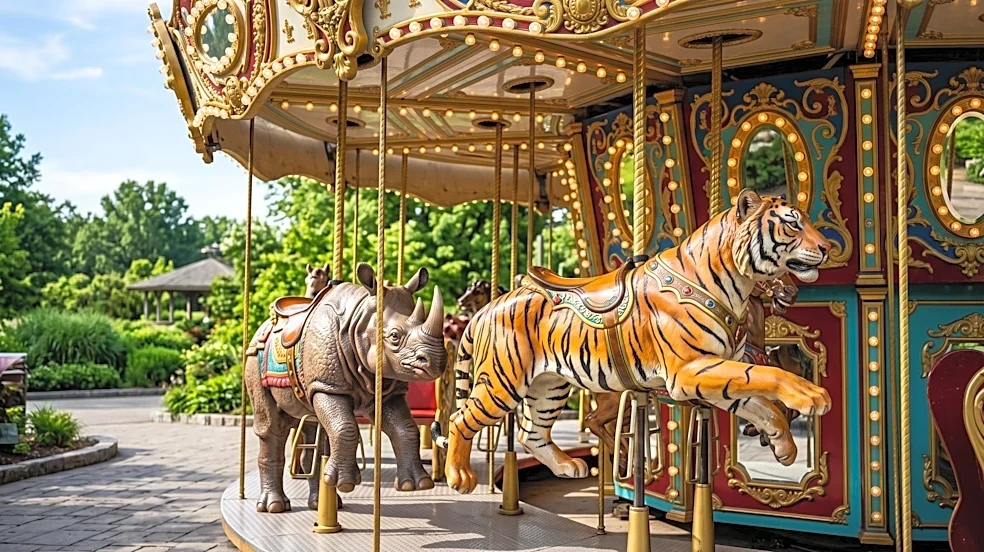
The Birmingham Zoo is set to reopen its endangered species carousel, which originally debuted in 2002 but closed in 2024. The attraction has undergone a refurbishment through a partnership with Protective, a company headquartered in Birmingham. Chris
Pfefferkorn, CEO of the Birmingham Zoo, highlighted the carousel's role in creating lasting memories for generations of visitors, similar to the zoo's train and overall experience. David Loper of Protective expressed the company's pride in supporting the zoo's success, noting their 100-year presence in Birmingham and the zoo's 70-year history. The carousel features 36 animals, all of which are listed as endangered, aligning with the zoo's mission to conserve, protect, and educate the public about these species. The reopening aims to offer both entertainment and educational value regarding endangered wildlife.
Why It's Important?
The reopening of the endangered species carousel at the Birmingham Zoo signifies a renewed commitment to both community engagement and wildlife conservation. For the local community, it restores a beloved attraction that contributes to family-friendly entertainment and educational opportunities, potentially boosting local tourism and recreational activities. The partnership between the Birmingham Zoo and Protective underscores the importance of corporate-community collaborations in sustaining cultural and educational institutions. This initiative also reinforces the zoo's broader mission of raising awareness about endangered species, which is crucial for fostering environmental stewardship among visitors. By featuring 36 endangered animals, the carousel serves as a tangible educational tool, helping to inform the public about global conservation challenges and the importance of protecting biodiversity. This effort can inspire future generations to engage in conservation efforts and support wildlife protection.
What's Next?
Following the reopening, the Birmingham Zoo will continue to monitor visitor engagement with the refurbished carousel and assess its impact on educational outreach regarding endangered species. The partnership with Protective may lead to further collaborative projects aimed at enhancing zoo attractions and conservation programs. The zoo will likely promote the carousel as a key feature, drawing in more visitors and reinforcing its role as a regional educational and recreational hub. Future initiatives could include developing new interpretive materials or programs around the carousel's endangered animal figures to deepen the educational experience. The success of this refurbishment could also encourage other corporate entities to invest in similar community-focused projects, fostering a stronger network of support for local institutions.
Beyond the Headlines
The refurbishment and reopening of the endangered species carousel at the Birmingham Zoo highlight a deeper societal value placed on both recreation and education, particularly concerning environmental issues. The choice to feature only endangered animals on the carousel subtly integrates a critical conservation message into a family-friendly activity, demonstrating how entertainment can be a powerful vehicle for public awareness. This approach reflects a growing trend in educational institutions to make complex topics, such as biodiversity loss, accessible and engaging for all ages. Furthermore, the long-standing partnership between the zoo and Protective exemplifies the potential for sustained corporate social responsibility to contribute significantly to community well-being and environmental causes, moving beyond mere philanthropy to integrated, long-term support. This model could serve as an example for other cities looking to blend public enjoyment with educational imperatives.