







What's Happening?
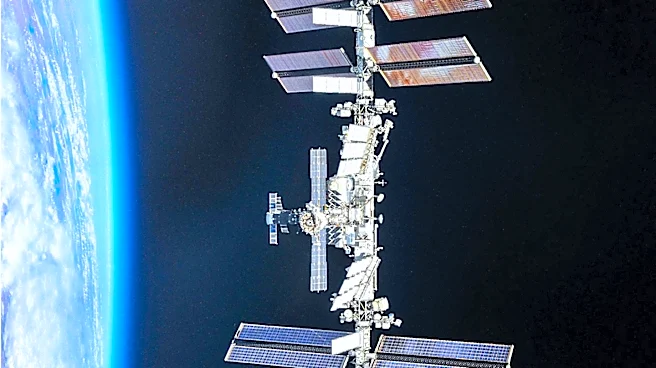
NASA astronaut Anil Menon is set to embark on an eight-month mission to the International Space Station (ISS) on July 14, 2026. Menon, who has a background in emergency medicine and serves as a colonel in the US Space Force, will conduct various scientific
investigations during his stay. His research will focus on the effects of prolonged space travel on the human body, including studies on blood circulation and vein structure. Menon will also test new technologies for generating intravenous fluids and manufacturing semiconductor crystals in space. He will be joined by Russian cosmonauts Pyotr Dubrov and Anna Kikina aboard the Soyuz MS-29 spacecraft.
Why It's Important?
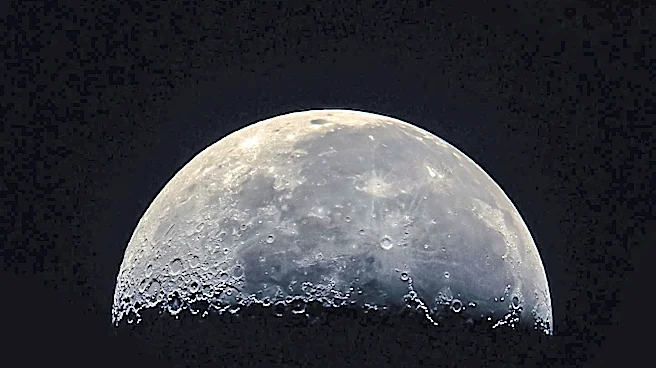
Menon's mission is crucial for advancing our understanding of human health in space, which is vital for future deep-space missions. The research conducted could lead to significant medical advancements, reducing the need for Earth-based assistance during space travel. Additionally, the development of semiconductor crystals in space could revolutionize high-performance computing and medical technologies. Menon's work will contribute to NASA's long-term goals of sustainable human presence beyond Earth, potentially paving the way for missions to the Moon, Mars, and beyond.
What's Next?
As Menon and his team prepare for launch, NASA will provide live coverage of the event, allowing the public to witness this significant milestone. During the mission, Menon will continue to conduct experiments and gather data, which will be analyzed to inform future space missions. The success of this mission could lead to further exploration and research opportunities, enhancing our capabilities for long-duration space travel.