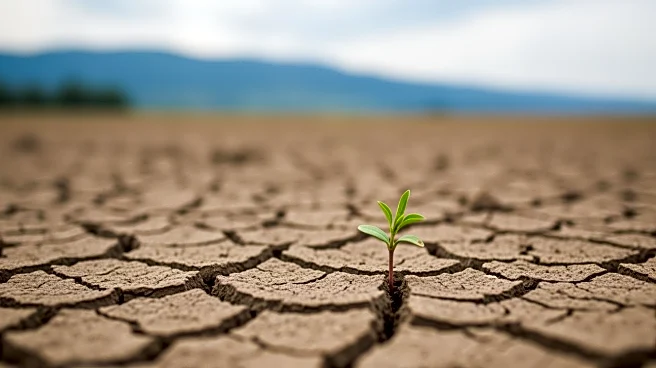

What's Happening?
Pakistan's agriculture sector, a significant contributor to the national economy, is experiencing severe challenges due to climate shocks and policy failures. The sector, which contributes nearly a quarter
of the country's GDP and employs over a third of the population, has seen a decline in growth, with agricultural growth recorded at just 0.56% for 2024-25. Erratic weather patterns, rising input costs, and inconsistent government policies have disrupted farm activities, particularly in Punjab, which produces 70% of Pakistan's food grains. Major crops such as wheat, cotton, sugarcane, and rice have been destroyed, and damaged irrigation networks have delayed recovery efforts. Official estimates suggest agricultural losses have exceeded Rs430 billion nationwide.
Why It's Important?
The decline in Pakistan's agriculture sector raises concerns about food security and rural livelihoods. The crisis is not only due to natural disasters but also reflects deeper structural flaws in the sector. Farmers have incurred significant losses due to flawed pricing policies and a market-driven wheat regime that favors middlemen over growers. The textile sector, heavily reliant on cotton, has been impacted, increasing dependence on imports. Without urgent reforms, Pakistan risks prolonged food insecurity, rising imports, and deepening rural distress. The situation calls for agriculture to be treated as a national priority rather than a provincial burden.