

What's Happening?
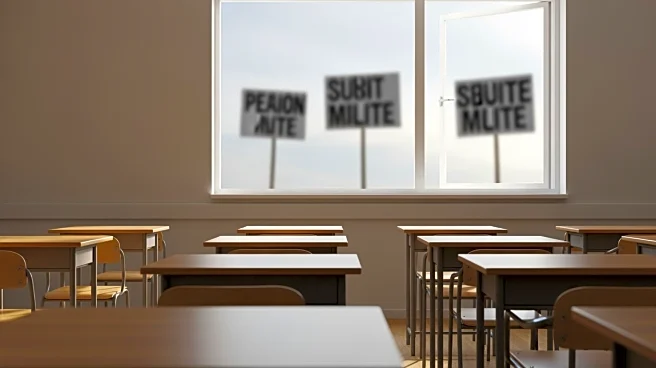
Over 100 students from Hamden High School participated in a walkout to protest against U.S. Immigration and Customs Enforcement (ICE) actions. The protest, organized by students Ned Foley and Charlotte Stover, saw participants marching 1.6 miles to Hamden Memorial
Town Hall, chanting slogans like 'Say it loud, say it clear, immigrants are welcome here.' The event was organized in just a week and drew a significant turnout, with students from various grades participating. The protest aimed to empower students to use their voices for change and to stand against policies they perceive as unjust. The walkout also included support from the Citywide Youth Coalition and activists from Yale University, who ensured the safety of the students during the protest.
Why It's Important?
This protest underscores the growing involvement of young people in social and political activism, particularly concerning immigration policies. The participation of high school students in such demonstrations highlights their role as emerging voices in societal debates. This event reflects a broader trend of youth activism in the U.S., where young people are increasingly taking a stand on issues that affect their communities and future. The protest also serves as a reminder of the power of collective action and the potential influence of young voters in shaping public policy. By organizing and participating in such events, students are not only advocating for change but also learning valuable lessons in civic engagement and leadership.
What's Next?
Following the walkout, it is likely that similar protests could be organized by students in other regions, inspired by the actions of Hamden High School students. The involvement of organizations like the Citywide Youth Coalition suggests that there may be continued support and resources available for young activists. Additionally, the protest could prompt discussions within the school and local community about the role of students in activism and the importance of addressing immigration issues. As these students grow into voters, their experiences and actions could influence future political landscapes and policy decisions.