


What's Happening?
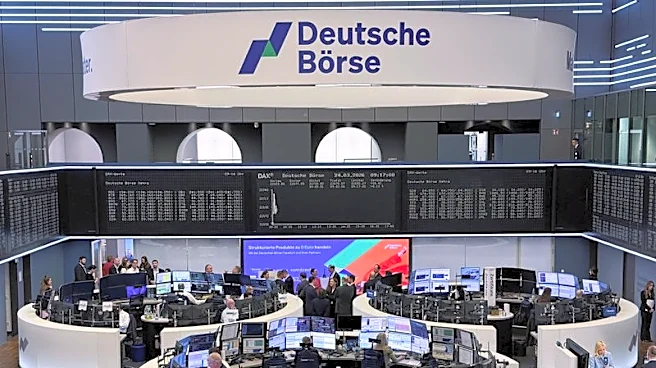
President Trump announced plans to hit Iran 'extremely hard' in a national address, leading to significant market reactions. Asian stocks, U.S. futures, and oil prices experienced volatility following his speech. Brent crude futures rose by 5.37%, while
U.S. West Texas Intermediate increased by 4.51%. The U.S. dollar strengthened against major currencies, and U.S. Treasury yields climbed, indicating a sell-off in the bond market. Trump's comments have raised concerns about further escalation in the Middle East, affecting regional energy infrastructure and global markets.
Why It's Important?
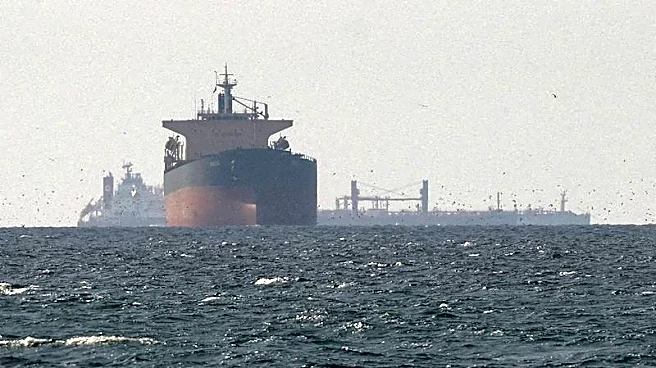
The geopolitical tensions between the U.S. and Iran have far-reaching implications for global markets and energy prices. Trump's threat to intensify military actions could lead to disruptions in the Strait of Hormuz, a critical chokepoint for global oil supply. This situation poses risks of elevated energy prices, impacting inflation and economic growth worldwide. The uncertainty surrounding the conflict affects investor sentiment and market stability, with potential consequences for international trade and economic policies.
What's Next?
The conflict's duration and intensity will be key factors in determining its impact on global markets. Further military actions could exacerbate energy supply disruptions, leading to sustained high oil prices. Stakeholders will need to monitor developments closely, as prolonged instability could affect economic growth and inflation. The U.S. administration's decisions regarding military strategy and diplomatic negotiations will be crucial in shaping the conflict's outcome and its economic implications.