





What's Happening?
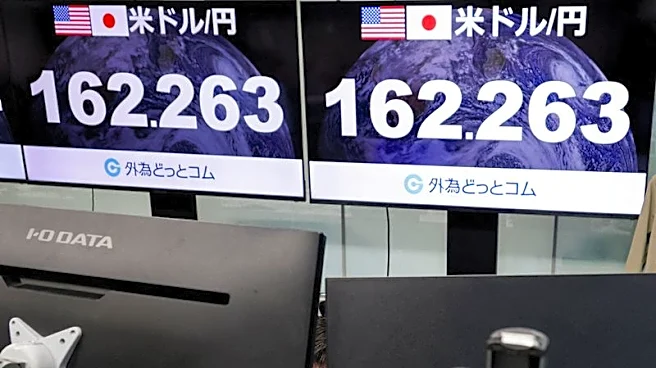
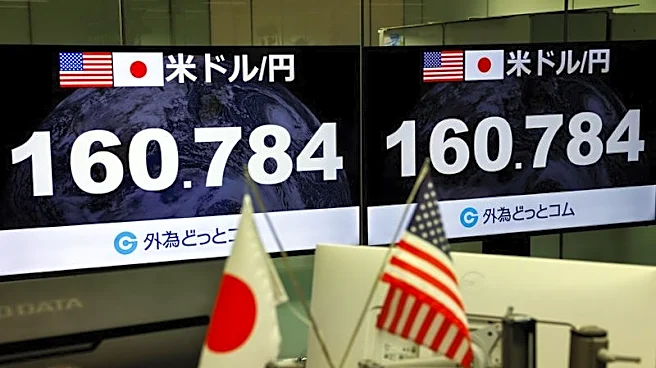
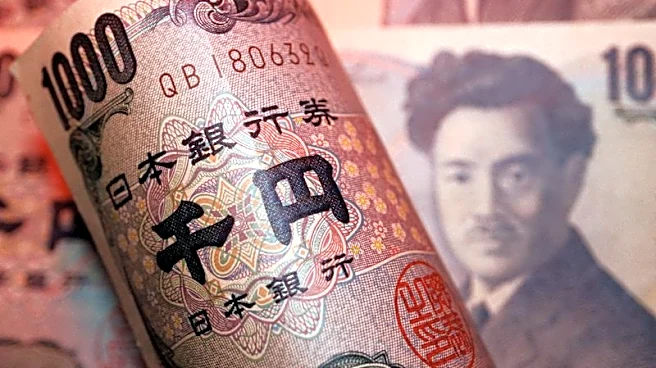
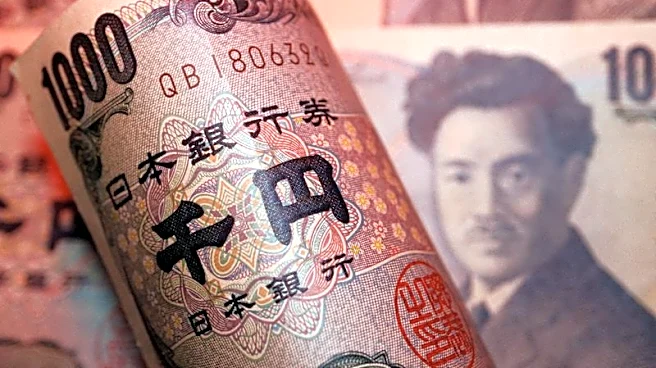
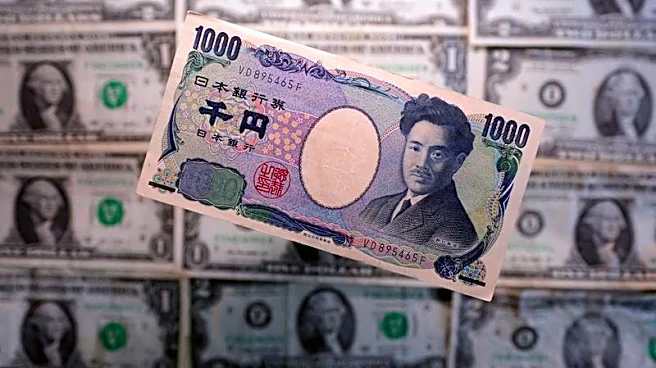
The U.S. Treasury has intervened in the foreign exchange market to support the Japanese yen, marking the first such action in over a decade. This intervention comes as the yen has been trading near 40-year lows against the dollar. The Federal Reserve
Bank of New York executed the intervention by selling euros for yen on behalf of the Treasury through financial institutions Goldman Sachs and Morgan Stanley. The exact amount of yen purchased was not disclosed. This move follows Japan's own efforts to stabilize its currency, with reports indicating that Japan may have sold up to $58.97 billion to buy yen. The intervention by the U.S. Treasury was reportedly communicated to several banks, signaling potential future actions to stabilize the yen. The yen saw a notable increase in value following the intervention, with the dollar dropping from about 158.9 yen to approximately 157.6 yen.
Why It's Important?
The U.S. Treasury's intervention is significant as it highlights the collaborative efforts between the U.S. and Japan to address the yen's weakness, which has been exacerbated by speculative trading. A weak yen can have broad implications for global markets, affecting trade balances and economic stability. For Japan, a stronger yen is crucial to prevent inflationary pressures and maintain economic stability. For the U.S., supporting the yen can help stabilize international markets and prevent potential economic disruptions. This intervention also signals a potential shift in U.S. policy towards more active involvement in foreign exchange markets, which could influence future economic and trade relations.
What's Next?
Japan and the United States may announce a joint policy to address the yen's weakness as early as next week. This policy is expected to serve as a deterrent against speculative trading that has pressured the yen. The announcement could include measures to stabilize the currency and prevent further devaluation. Stakeholders in the financial markets will be closely monitoring these developments, as any significant policy changes could impact currency trading strategies and international economic relations. The outcome of these interventions will likely influence future U.S. and Japan economic policies and their approach to managing currency stability.