






What's Happening?
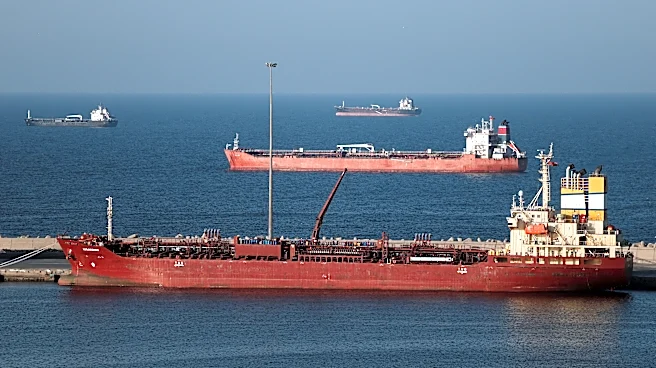
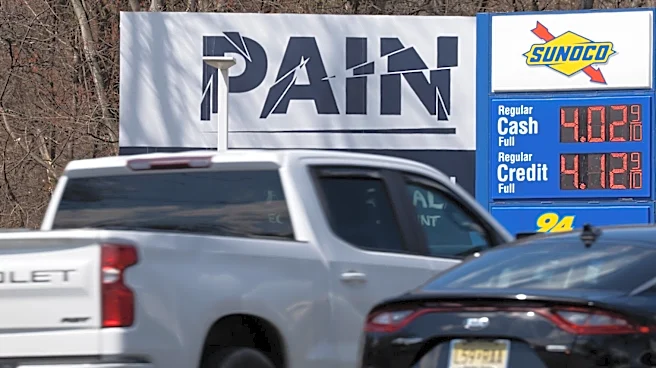
U.S. Senate Majority Leader John Thune, R-S.D., has indicated he is open to considering a ban on U.S. diesel exports. This consideration comes as diesel prices have reached high levels, with the average price hitting $6.27 per gallon, an increase of approximately
80 cents from the previous month, according to AAA. Thune suggested that restricting exports could potentially alleviate pressure on domestic diesel prices if sufficient supply is available within the U.S. The surge in diesel prices is attributed to tight global supplies, exacerbated by ongoing conflicts in the Middle East and Ukraine, as well as disruptions in refinery operations. While Interior Secretary Doug Burgum previously stated that an oil or fuel export ban would likely not lower energy prices, Thune remains willing to explore the idea as officials seek solutions to address the elevated fuel costs impacting consumers and industries, particularly farmers.
Why It's Important?
The potential implementation of a ban on U.S. diesel exports carries significant implications for various sectors of the U.S. economy. Farmers and ranchers, who rely heavily on diesel for their operations, are currently facing increased expenses due to high fuel costs. A ban could lead to lower domestic diesel prices, providing financial relief to the agricultural sector and potentially reducing the cost of food production. However, such a measure could also disrupt international energy markets and impact U.S. energy companies that profit from exports. The debate highlights a tension between domestic economic relief and global market dynamics, with potential consequences for trade relationships and the profitability of the U.S. energy industry. The decision would reflect a policy choice prioritizing domestic consumers and industries over export revenues in a period of energy market volatility.
What's Next?
The discussion around a potential diesel export ban is likely to continue within Congress and among relevant government agencies. Senate Majority Leader John Thune's openness to the idea suggests that it could be formally debated as a policy option to address high fuel costs. Stakeholders, including agricultural groups, energy companies, and consumer advocates, are expected to weigh in on the proposal, presenting arguments for and against its implementation. The Biden administration, through officials like Interior Secretary Doug Burgum, has previously expressed skepticism about the effectiveness of such bans in lowering prices, indicating potential resistance. Any concrete steps towards a ban would likely involve legislative action or executive orders, and would require careful consideration of its economic impacts, both domestically and internationally. The ongoing global energy landscape, influenced by geopolitical events, will also play a crucial role in shaping future policy decisions.
Beyond the Headlines
A ban on U.S. diesel exports would represent a significant shift in U.S. energy policy, potentially signaling a move towards greater energy nationalism in response to global supply chain vulnerabilities and price volatility. Such a policy could set a precedent for future interventions in energy markets, raising questions about the balance between free market principles and government intervention during crises. It could also influence the U.S.'s standing as a reliable energy supplier on the global stage, potentially impacting diplomatic relations and trade agreements. Furthermore, the debate underscores the broader challenge of energy security and affordability in an interconnected world, prompting deeper discussions about domestic energy production, refining capacity, and strategic reserves. The long-term implications could include a re-evaluation of U.S. energy independence goals and the role of exports in national economic strategy.