





What's Happening?
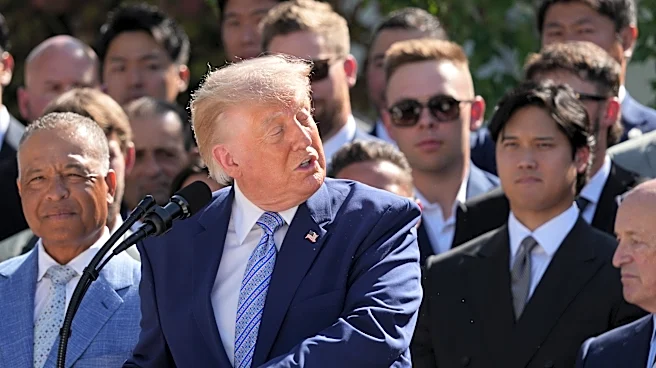
A year after President Trump signed legislation ending federal support for public radio and television, public media stations across the U.S. are navigating a new landscape. The withdrawal of federal funds, which previously accounted for a significant
portion of budgets, especially for rural stations, led to widespread layoffs and restructuring. Notably, PBS and NPR reduced their workforce, and the Corporation for Public Broadcasting ceased operations. Despite these challenges, many stations have experienced a surge in donations from listeners and viewers, a phenomenon described as 'rage-giving.' This unexpected financial support has allowed some stations to rehire staff and continue operations, albeit in a leaner format. For instance, South Dakota Public Broadcasting, which had to lay off several journalists, managed to bring back a popular host through community donations.
Why It's Important?
The shift in funding dynamics for public media highlights the critical role of community support in sustaining these institutions. The reliance on public donations underscores a broader trend of media organizations seeking alternative revenue streams amid changing political and economic landscapes. This development could lead to a more engaged and invested audience, as viewers and listeners become direct contributors to the content they consume. However, the sustainability of this model remains uncertain, as it depends on continued public generosity. The situation also raises questions about the future of public media in rural areas, where donor bases are smaller, and the impact on the diversity of content available to audiences.
What's Next?
Public media stations are likely to continue exploring innovative ways to engage audiences and secure funding. This may include expanding digital offerings, such as podcasts and online content, to reach broader audiences. Additionally, legal challenges to the funding cuts could result in changes to the current financial landscape for public media. As stations adapt to these new realities, they will need to balance maintaining quality content with financial sustainability. The ongoing support from listeners and viewers will be crucial in determining the long-term viability of public media in the U.S.