
What's Happening?
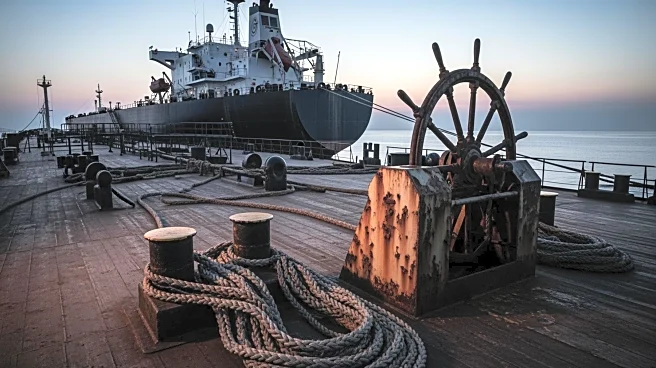
The oil tanker Skipper, recently seized by the U.S. Coast Guard, is now under way in U.S. custody. The vessel was captured in international waters for alleged violations of sanctions on Iran's energy industry.
The Skipper, a stateless and sanctioned vessel, was carrying approximately 1.85 million barrels of crude oil. The seizure is part of a broader U.S. effort to target the 'shadow fleet' of tankers that transport illicit oil for regimes like those in Iran and Venezuela. The Office of Foreign Asset Control (OFAC) has added six more Venezuela-linked vessels to its list of sanctioned entities, further tightening the U.S. sanctions regime.
Why It's Important?
The capture of the Skipper highlights the U.S.'s commitment to enforcing sanctions and disrupting the financial networks that support sanctioned regimes. By targeting these shadow fleets, the U.S. aims to cut off a significant source of revenue for countries like Iran and Venezuela, which are often accused of using oil revenues to fund illicit activities. The seizure could deter other operators from engaging in similar activities due to the increased risk of asset seizure. However, it also raises concerns about potential impacts on global oil prices and supply chains, as aggressive enforcement could lead to supply disruptions.
What's Next?
The U.S. may continue to target other vessels involved in similar activities, as there are reportedly many more tankers operating under false flags. The seizure could lead to further diplomatic tensions, particularly with countries that have economic ties to Venezuela and Iran. The U.S. will likely face international scrutiny over its enforcement actions in international waters, and there may be legal challenges from the affected parties. Additionally, the impact on oil prices will be closely monitored, as any significant disruptions could have broader economic implications.