


What's Happening?
The U.S. Supreme Court is currently reviewing a request from the Trump administration to redetain Badar Khan Suri, a postdoctoral researcher at Georgetown University. This appeal follows a federal district judge's decision in May 2025 to release Khan Suri, a ruling
that was subsequently affirmed by the U.S. 4th Circuit Court of Appeals. Khan Suri was initially detained for 58 days by federal immigration agents under a rarely used statute, with allegations that he threatened U.S. foreign policy by spreading 'Hamas propaganda' and antisemitism, claims he denies. His lawyers argue that the government likely violated his First Amendment rights by targeting him for protected speech and familial associations. The government's appeal does not contest the constitutionality of its actions but rather argues that constitutional challenges to detention should only be heard in immigration courts, not federal courts. Khan Suri's legal team has until October 21 to file an opposing brief before the Supreme Court decides whether to hear the case. This situation highlights a broader debate regarding the jurisdiction of federal judges over detention claims for noncitizens, as there is no explicit Supreme Court precedent governing this area.
Why It's Important?
This Supreme Court case carries significant implications for the rights of noncitizens in the U.S. and the scope of judicial review over immigration detention. If the Supreme Court sides with the Trump administration, it could establish a precedent that limits noncitizens' ability to challenge their detention in federal courts, potentially allowing for prolonged detention without federal judicial oversight. Khan Suri's lawyers and supporters view this as a move towards an authoritarian direction, where the government could imprison individuals indefinitely before proving guilt or innocence. The case also touches upon concerns about academic freedom and freedom of speech, as Khan Suri's detention is seen by some as a federal crackdown on these principles. The outcome could influence how immigration courts, which Khan Suri's lawyers claim are politically biased due to a 'purge' of immigration judges by the Trump administration, handle constitutional challenges. Furthermore, a ruling in favor of the government could set a nationwide precedent, impacting similar cases and potentially eroding protections for noncitizens across the country.
What's Next?
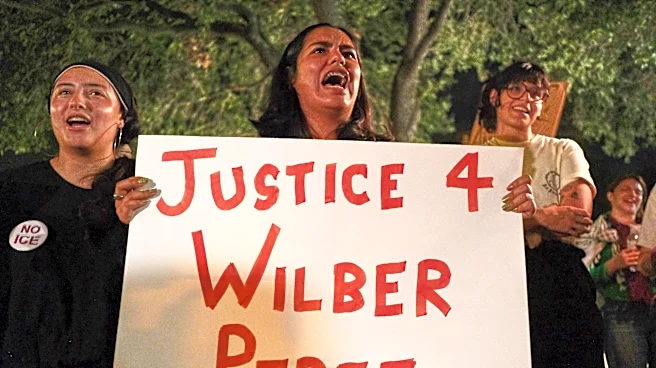
Khan Suri's legal team is preparing to file an opposing brief by October 21. Following this, the Supreme Court will decide whether to grant certiorari and hear the case. Experts suggest the Supreme Court is likely to take the case due to a 'circuit split,' where different federal appeals courts have issued conflicting rulings on the jurisdiction of federal courts over immigration detention claims. If the Supreme Court takes the case, its decision will clarify the extent to which federal courts can intervene in immigration detention matters. The outcome will be closely watched by legal scholars, civil liberties advocates, and immigrant rights organizations, as it will set a significant precedent for future cases involving noncitizens' detention and their access to federal judicial review. The case is also expected to continue to be a focal point for protests and advocacy within the Georgetown community and beyond, emphasizing the ongoing debate about immigration policies and constitutional rights.
Beyond the Headlines
The case of Badar Khan Suri extends beyond the immediate legal question of detention jurisdiction, delving into deeper implications concerning the balance of power between the executive and judicial branches, particularly in immigration matters. The argument that immigration courts are politically biased and a product of the Trump administration's 'purge' of immigration judges raises fundamental questions about the fairness and impartiality of the immigration justice system. This situation highlights the potential for executive actions to influence judicial processes and the critical role of federal courts in safeguarding individual liberties against potential overreach. The case also underscores the vulnerability of noncitizens, especially those perceived as holding controversial views, to detention and the challenges they face in asserting their constitutional rights. The Supreme Court's decision could either reinforce the judiciary's role as a check on executive power or further empower the government in its immigration enforcement efforts, potentially shaping the future of civil liberties for noncitizens in the U.S. for decades to come.