
What's Happening?
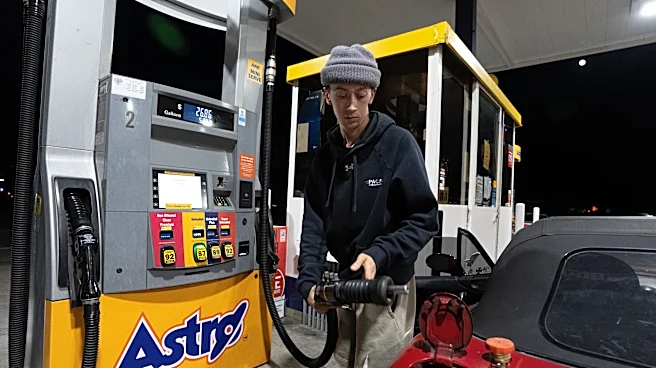
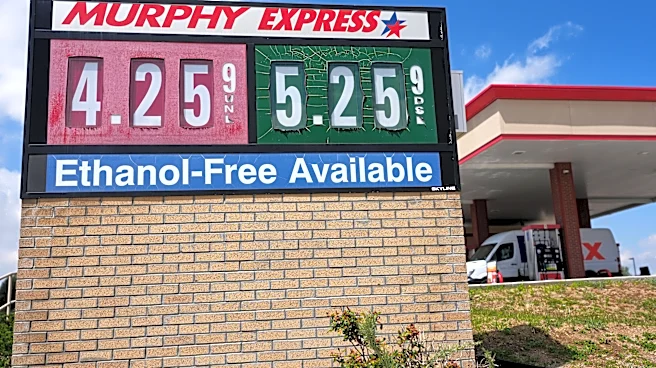
The ongoing conflict in Iran has led to a significant increase in crude oil prices, which in turn has caused gasoline prices in the United States to surge. As of Wednesday, the national average price for
gasoline reached $4.53 per gallon, according to AAA. Economists from the New York Federal Reserve have noted that the impact of these price hikes is being felt unevenly across different income groups, a phenomenon described as a 'K-shaped' economic effect. Lower-income households are disproportionately affected as a larger portion of their income is spent on energy-related expenses such as gasoline and electricity. In contrast, higher-income households have not significantly reduced their gasoline consumption despite the price increases.
Why It's Important?
The disparity in how different income groups are affected by rising gasoline prices underscores broader economic inequalities. For lower-income households, the increased cost of gasoline can lead to reduced consumption and financial strain, potentially increasing credit card and auto loan delinquencies. This could further limit their access to credit and spending power, exacerbating economic challenges. On the other hand, higher-income households, which are less affected by these price hikes, continue to spend, contributing to overall economic activity. This divergence in spending behavior highlights the uneven recovery and resilience within the U.S. economy, with potential implications for economic policy and social equity.
What's Next?
As gasoline prices remain high, policymakers may need to consider measures to alleviate the financial burden on lower-income households. This could include targeted subsidies or tax relief to help offset the increased cost of living. Additionally, the ongoing geopolitical tensions in Iran and their impact on global oil markets will likely continue to influence gasoline prices. Monitoring these developments will be crucial for understanding future economic trends and preparing appropriate policy responses.
Beyond the Headlines
The K-shaped economic impact of rising gasoline prices also raises questions about energy policy and the transition to renewable energy sources. As fossil fuel prices fluctuate due to geopolitical events, there may be increased pressure to invest in alternative energy solutions that can provide more stable and sustainable energy costs. This shift could have long-term implications for energy infrastructure, environmental policy, and economic resilience.