





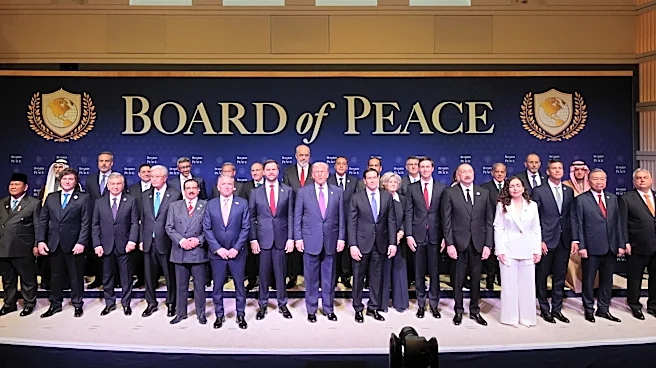
What's Happening?
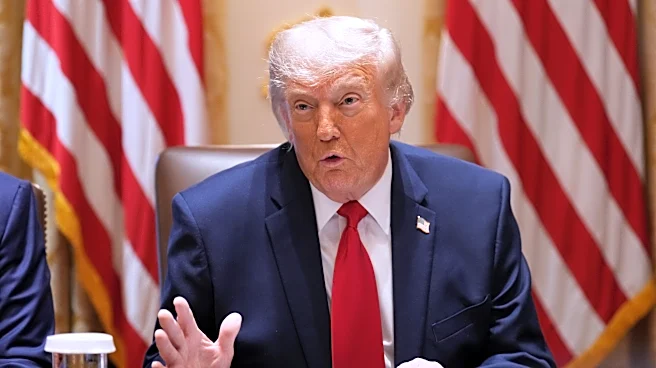
President Donald Trump has called for more Middle Eastern and Gulf states to join the Abraham Accords, a diplomatic initiative from his first term aimed at normalizing relations between Israel and Arab nations. Despite his efforts, the initiative has faced
significant challenges. Only a few countries, including the United Arab Emirates, Morocco, Bahrain, and Sudan, have signed the accords. Trump's recent push involved discussions with leaders from Saudi Arabia, Qatar, Pakistan, Egypt, Jordan, Bahrain, Turkey, and the UAE. However, the response has been tepid, with Pakistan outright rejecting the proposal and other nations remaining silent. Experts criticize the accords for not addressing the Israeli-Palestinian conflict, and Trump's demand is seen as unlikely to succeed given the complex regional tensions.
Why It's Important?
The expansion of the Abraham Accords is a key foreign policy goal for President Trump, particularly as he seeks to strengthen his position ahead of a potential second term. The accords are intended to counter Iran's influence by fostering alliances between Israel and its Arab neighbors. However, the lack of engagement from key regional players highlights the challenges of achieving lasting peace in the Middle East. The situation underscores the difficulty of balancing diplomatic efforts with the realities of regional politics, where longstanding conflicts and rivalries persist. The outcome of this initiative could impact U.S. foreign policy and its relationships with Middle Eastern countries.
What's Next?
The future of the Abraham Accords remains uncertain. President Trump may continue to push for broader participation, but the lack of enthusiasm from key nations suggests that significant diplomatic efforts will be required to achieve any expansion. The U.S. may need to address the concerns of these countries, particularly regarding the Israeli-Palestinian conflict, to gain their support. Additionally, the evolving geopolitical landscape in the Middle East, including Iran's role, will likely influence the success of these diplomatic efforts.