
What's Happening?
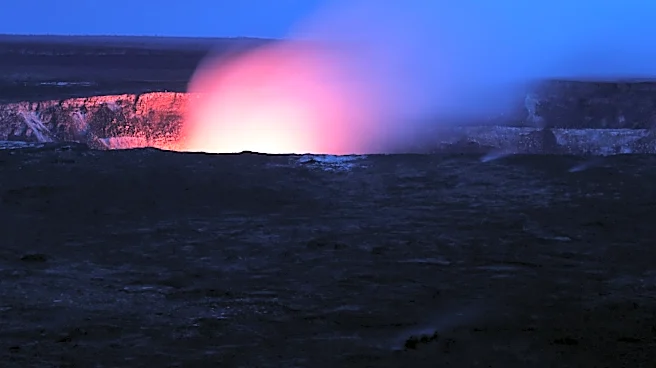
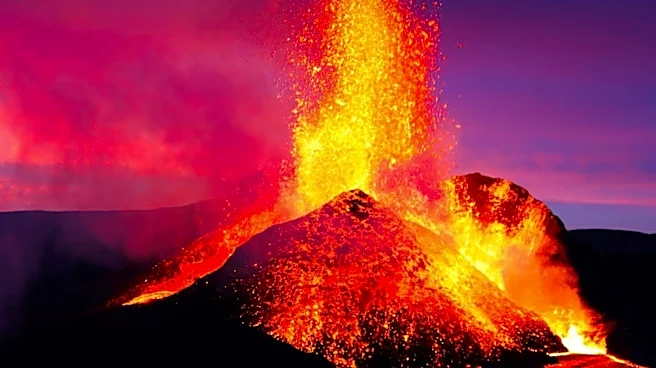
Hawaii's Kilauea volcano has erupted again, marking its 52nd eruptive episode since December 2024. The eruption began on July 28, with lava fountains reaching up to 500 feet. The activity is confined to the Halema'uma'u crater within Hawaii Volcanoes
National Park. Volcanic gases released during the eruption pose potential health risks to downwind populations, particularly those with respiratory issues. The eruption follows a pattern of frequent activity driven by refilling magma chambers beneath the volcano.
Why It's Important?
The eruption of Kilauea is a significant geological event that impacts both the local environment and public health. The release of volcanic gases can affect air quality, posing risks to residents and visitors. The eruption also highlights the dynamic nature of Hawaii's volcanic landscape, which requires ongoing monitoring and preparedness. The frequent activity at Kilauea underscores the importance of understanding volcanic behavior and its potential impacts on communities and ecosystems.