
What's Happening?
In Arizona, a new law allowing tiny homes to be built in residential backyards is generating significant interest among residents seeking affordable housing solutions. The law, co-sponsored by state Sen.
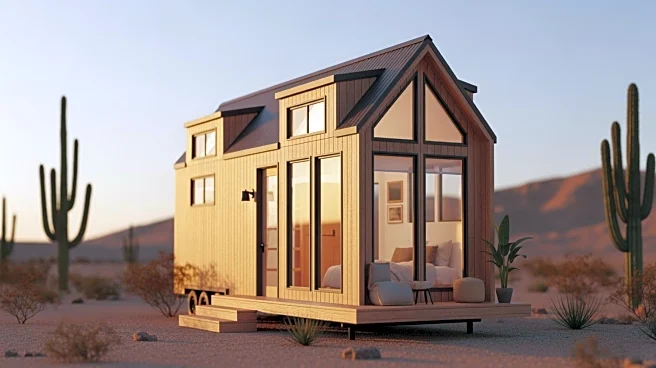
Analise Ortiz, aims to address the state's housing crisis by providing more options for affordable living spaces. Tiny homes, typically no larger than 400 square feet, offer many of the same amenities as traditional homes, such as kitchens and air conditioning, making them an attractive option for a diverse range of buyers. At the Maricopa County Home and Garden Show, vendors reported strong interest from young couples, seniors, and families looking for multi-generational housing solutions. Despite the enthusiasm, the law has introduced challenges, as each city must create its own ordinance for backyard homes, leading to varying requirements. Some cities demand that tiny homes match the primary residence, and homeowners' associations can impose restrictions. Concerns also exist about the potential use of these homes as short-term rentals.
Why It's Important?
The introduction of Arizona's casita law is a significant step in addressing the state's housing shortage and rising costs. By enabling the construction of tiny homes in backyards, the law provides a flexible and affordable housing option for many residents. This development is particularly important as it offers a solution for young families and seniors who are priced out of the traditional housing market. However, the law's implementation highlights the complexities of local governance, as cities must navigate creating ordinances that balance community standards with the need for affordable housing. The potential for these homes to be used as short-term rentals also raises concerns about their impact on local housing markets. Overall, the law represents a critical effort to expand housing options and address the broader issue of housing affordability in Arizona.
What's Next?
As interest in tiny homes continues to grow, further legislative efforts may be needed to streamline regulations and address concerns about short-term rentals. Stakeholders, including lawmakers, city officials, and housing advocates, will likely engage in discussions to refine the law and ensure it meets the needs of Arizona's diverse communities. Additionally, as more residents explore tiny home living, there may be increased demand for supportive infrastructure and services to accommodate this housing trend. The success of Arizona's casita law could also inspire similar initiatives in other states facing housing shortages, potentially leading to a broader national conversation about innovative housing solutions.