

What's Happening?
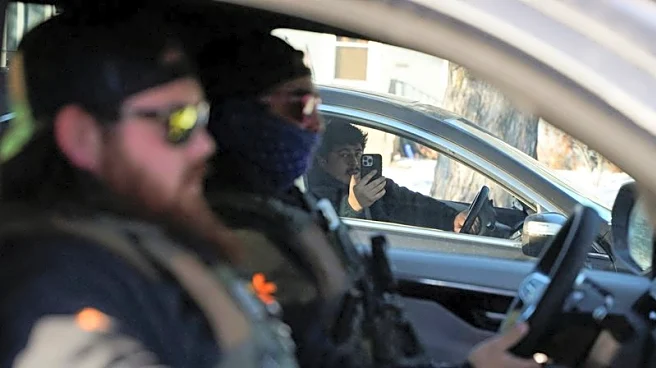
A federal judge in Minnesota has ruled against halting President Trump's immigration enforcement operations in Minneapolis, following a lawsuit by state officials alleging civil rights violations. The lawsuit claims that federal agents engaged in unconstitutional
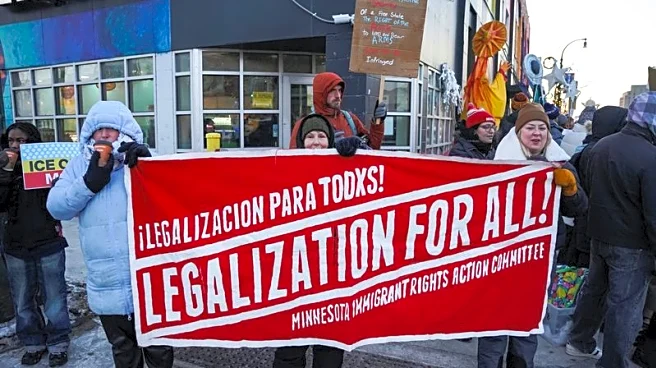
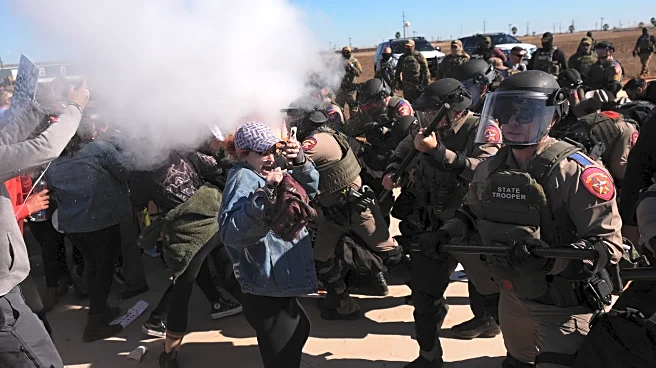
actions, including racial profiling and unlawful detentions. Despite the ruling, protests against Immigration and Customs Enforcement (ICE) actions are planned across the U.S., with significant demonstrations occurring in cities like Indianapolis and Palm Beach Gardens. The protests are fueled by the recent shooting of Alex Pretti by federal agents, which has sparked calls for an independent investigation into the incident.
Why It's Important?
The decision to allow ICE operations to continue in Minneapolis underscores the ongoing tension between federal immigration policies and local jurisdictions. The ruling may embolden the Trump administration's aggressive immigration enforcement tactics, potentially leading to further clashes with state and local governments. The widespread protests reflect a growing public dissent against these policies, highlighting the deep divisions within the country over immigration issues. The situation also raises questions about the balance of power between federal and state authorities in enforcing immigration laws.
What's Next?
The Department of Justice has announced a civil rights investigation into the shooting of Alex Pretti, which could lead to further legal and political ramifications. State officials in Minnesota are expected to continue their legal battle against federal immigration actions, potentially appealing the recent court decision. Nationwide protests are likely to persist, keeping immigration enforcement at the forefront of public discourse. The outcome of these events could influence future immigration policies and the political landscape leading up to the next election cycle.