



What's Happening?
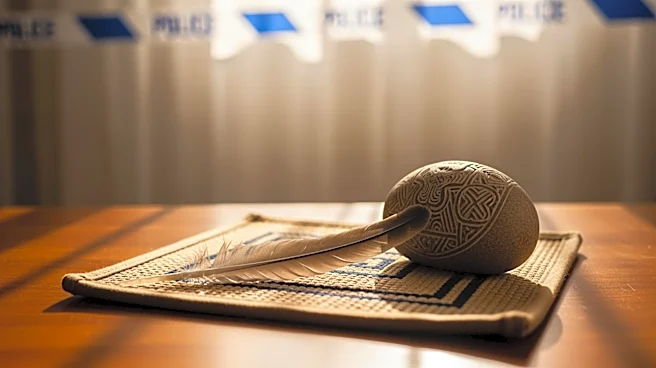
The Guam Museum is hosting an exhibit titled 'Yanggen Ti Hita Pues Hayi' or 'If Not Us, Then Who?' which focuses on the island's decolonization journey. The exhibit, organized in collaboration with the Commission on Decolonization and the Department of
CHamoru Affairs, showcases the history and ongoing efforts of the CHamoru people to achieve self-determination. It features a variety of media, including photos, videos, banners, petitions, paintings, and sculptures, to present a grassroots history of the movement. The exhibit aims to bridge generations by highlighting the struggles and achievements of the CHamoru people, encouraging both young and old to engage with their history and continue the fight for political status rectification.
Why It's Important?
The exhibit is significant as it brings attention to the longstanding issue of decolonization in Guam, a U.S. territory with a complex colonial history. It serves as a reminder of the CHamoru people's resilience and their ongoing struggle for self-determination. By educating visitors about the island's past and the efforts made by its people, the exhibit fosters a sense of unity and empowerment among the CHamoru community. It also highlights the broader implications of colonialism and the importance of preserving cultural identity and autonomy. The exhibit encourages dialogue and awareness, which are crucial for advancing the decolonization movement and addressing the political and social challenges faced by the CHamoru people.
What's Next?
The exhibit is open to the public until May 30, offering free admission to encourage widespread participation. It is expected to inspire further engagement in the decolonization movement, particularly among younger generations who may not be fully aware of their history. The exhibit organizers hope to see increased involvement from both CHamoru and non-CHamoru individuals in advocating for Guam's self-determination. Additionally, the exhibit may prompt discussions on the island's relationship with the U.S. military and the impact of military presence on CHamoru land and resources. The ongoing dialogue and education efforts are likely to contribute to a more informed and active community, pushing for meaningful change in Guam's political status.