









What's Happening?
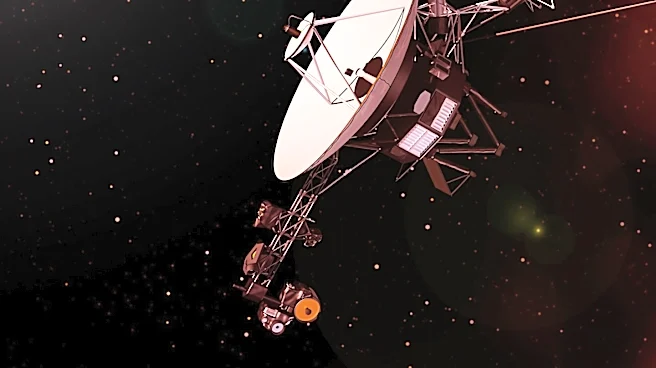
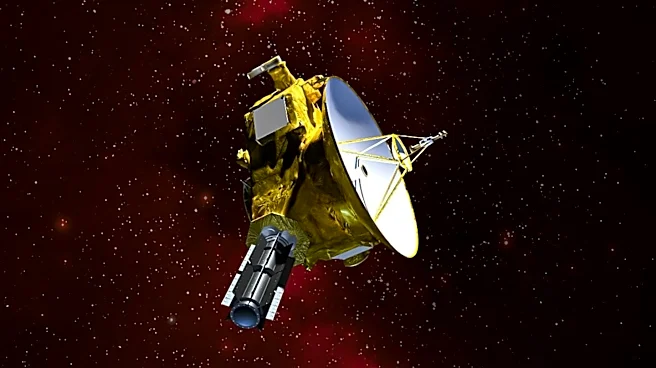
NASA is managing the dwindling power supply of Voyager 1 by strategically switching off instruments and heaters. This careful management is necessary to prevent the spacecraft's fuel lines from freezing, which would result in the loss of thrusters that
keep its antenna aimed at Earth. Voyager 1, launched nearly 50 years ago, relies on a radioisotope thermoelectric generator that loses about four watts of power annually. As a result, NASA engineers have been turning off non-essential systems to conserve power. The spacecraft's ability to communicate with Earth depends on maintaining the functionality of its thrusters, which are crucial for keeping its antenna properly aligned.
Why It's Important?
Voyager 1 is the most distant human-made object in space, providing invaluable data about the outer reaches of our solar system and beyond. Its continued operation is crucial for scientific research and our understanding of interstellar space. The challenges faced by Voyager 1 highlight the complexities of long-term space missions and the need for innovative solutions to extend the life of aging spacecraft. The mission's success demonstrates the importance of strategic resource management in space exploration, which could inform future missions and the development of new technologies to support long-duration space travel.
What's Next?
NASA will continue to monitor Voyager 1's power levels and make decisions about which systems to prioritize as the power supply diminishes. The goal is to keep at least one scientific instrument operational into the 2030s. Engineers will need to balance power conservation with the need to maintain critical systems, such as the thrusters, to ensure continued communication with Earth. The lessons learned from managing Voyager 1's power supply could influence the design and operation of future deep-space missions, where resource management will be a key factor in mission success.