





What's Happening?
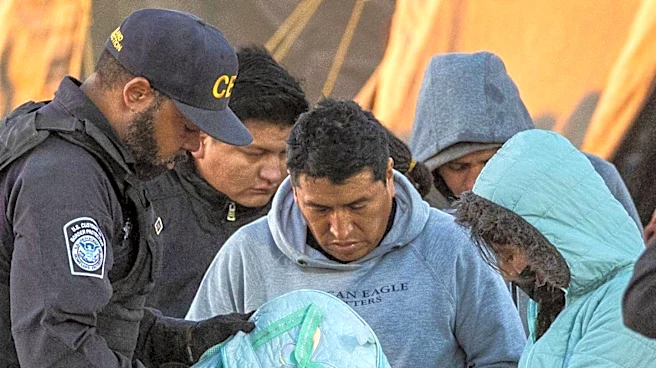
Karina Garcia, 37, a Texas woman, has surrendered to authorities in connection with a human smuggling operation that resulted in the deaths of seven migrants found inside a freight container. Garcia appeared before U.S. Magistrate Judge Matthew Watters
in Del Rio, Texas, after surrendering at a Del Rio port of entry. She faces two federal counts that could lead to a life sentence if convicted. Prosecutors allege that Garcia played a key role in an operation that spanned approximately three years, smuggling individuals from Mexico into the U.S. using cargo trains. Migrants or their relatives were reportedly charged between $1,500 and $10,000 for the journey. A federal grand jury indicted Garcia in July. The indictment details that seven migrants from Mexico and Honduras died in a Conex shipping container in May. Smugglers allegedly cut a lock, loaded the individuals inside, and closed the door, placing the unit atop another container without ventilation or cooling. Outside temperatures ranged from 88 to 92 degrees Fahrenheit that afternoon. The train traveled east towards San Antonio, where smugglers reportedly opened the unit, discovered the migrants in peril, and then fled. A yard worker later found six bodies in Laredo on May 10.
Why It's Important?
This case highlights the severe and often fatal risks associated with human smuggling operations, particularly those involving dangerous methods like transporting individuals in unventilated freight containers. The deaths of seven migrants underscore the extreme conditions and disregard for human life by those involved in such illicit activities. The long-running nature of the alleged operation, spanning three years, indicates a sophisticated network exploiting vulnerable individuals seeking to enter the U.S. The significant fees charged to migrants or their families further illustrate the exploitative nature of these schemes. This incident also draws attention to the challenges faced by law enforcement and border patrol agencies in interdicting these operations and the critical need for international cooperation to dismantle smuggling networks. The involvement of Union Pacific rail infrastructure in the smuggling route points to vulnerabilities in freight transportation systems that can be exploited by criminal organizations.
What's Next?
Karina Garcia will undergo further legal proceedings, including potential trials, where prosecutors will present evidence to support the federal charges against her. The outcome of her case could set a precedent for how human smuggling operations, especially those resulting in fatalities, are prosecuted. Law enforcement agencies will likely continue their investigations to identify and apprehend other individuals involved in this and similar smuggling networks. There may be increased scrutiny and security measures implemented by freight companies, such as Union Pacific, to prevent their infrastructure from being used for human smuggling. The incident could also fuel ongoing debates about border security, immigration policies, and humanitarian efforts to address the root causes of migration and prevent such tragedies in the future.
Beyond the Headlines
Beyond the immediate legal and enforcement aspects, this tragedy exposes the profound human cost of irregular migration and the desperation that drives individuals to undertake perilous journeys. The use of freight containers as a means of transport, leading to deaths from extreme heat and lack of ventilation, is a stark reminder of the inhumane conditions imposed by smugglers. This case also touches upon the broader issue of organized crime and its adaptation to exploit various transportation methods for illicit purposes. Ethically, it raises questions about the responsibility of all actors, from individuals to corporations, in preventing such atrocities. Societally, it underscores the need for comprehensive approaches to migration that address both security concerns and humanitarian imperatives, aiming to create safer pathways and reduce the demand for dangerous smuggling services. The incident serves as a powerful narrative in the ongoing discourse about human dignity and border policies.