




What's Happening?
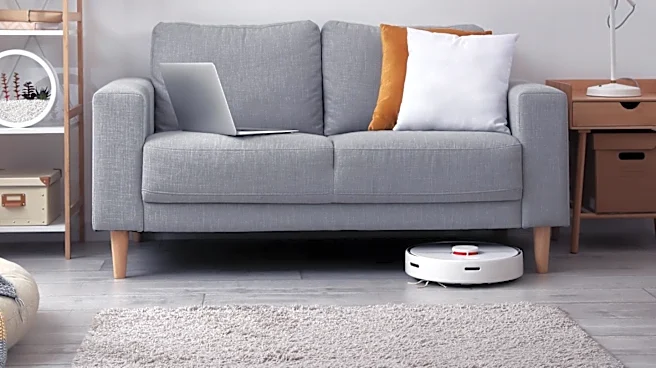
The U.S. Cybersecurity and Infrastructure Security Agency (CISA) has issued a security advisory regarding vulnerabilities found in Eufy Omni C20 and X10 Pro Omni robot vacuums. CISA identified three specific flaws in the Omni C20, one of which also affects
the X10 Pro Omni. These vulnerabilities include a flaw in the pairing process that could allow an unauthenticated attacker to execute system commands, hard-coded credentials in the Omni C20 that could grant access to sensitive information like mapping data, and improper certificate validation in the C20 that could enable interception of communications and arbitrary code execution. Eufy recommends that owners update their devices to firmware version 1.6.4 or later to mitigate these risks. CISA has not received reports of these vulnerabilities being actively exploited.
Why It's Important?
This CISA advisory is critically important for U.S. consumers and businesses using Eufy robot vacuums, as it highlights potential cybersecurity risks in smart home devices. The vulnerabilities, particularly the high-severity certificate validation flaw in the Omni C20, could expose users to unauthorized access, data breaches, and even control over their devices. For businesses, especially those using these models in office settings, the risk extends to sensitive mapping data and potential network compromise. The advisory underscores the broader challenge of securing Internet of Things (IoT) devices, which often collect personal data and operate within private environments. It serves as a reminder that convenience must be balanced with robust security measures, and that consumers need to be vigilant about firmware updates and security notifications from manufacturers.
What's Next?
Eufy Omni C20 and X10 Pro Omni owners are advised to immediately check their device's firmware version via the eufy Clean app and install any available updates to version 1.6.4 or newer. Eufy typically rolls out updates automatically, but manual verification is recommended. CISA's advisory may prompt Eufy to provide more transparency regarding the rollout of corrected firmware and the number of affected devices. This incident could also lead to increased scrutiny from regulatory bodies and consumer advocacy groups regarding the security practices of smart home device manufacturers. Consumers should remain proactive in monitoring security advisories for all their connected devices and prioritize products from manufacturers with strong security track records and transparent update policies.
Beyond the Headlines
The CISA advisory on Eufy robot vacuums sheds light on the often-overlooked cybersecurity risks associated with smart home technology. Beyond the immediate threat of device compromise, these vulnerabilities raise deeper concerns about data privacy, particularly with devices that map home interiors. The potential for unauthorized access to mapping data could reveal sensitive information about a user's living space, habits, and even security systems. This incident highlights the need for stronger industry standards and regulations for IoT device security, moving beyond basic functionality to ensure comprehensive protection against cyber threats. It also emphasizes the importance of consumer education on managing and securing their smart devices, as the responsibility for digital safety increasingly falls on the end-user.