





What's Happening?
Authorities in western Libya have apprehended a 'sabotage cell' suspected of orchestrating recent drone attacks on critical oil facilities. Arab media outlets, citing sources within the Tripoli-based Government of National Unity, reported that five individuals,
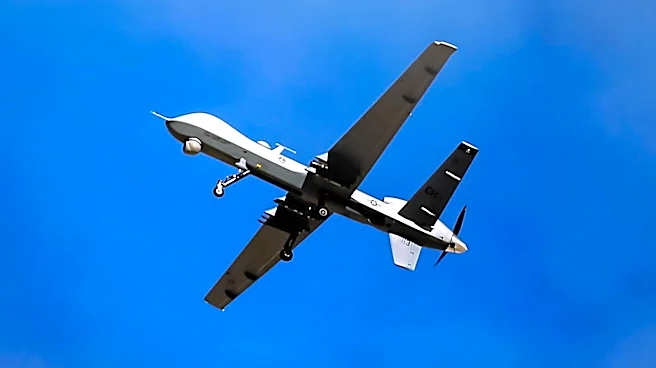
including both Libyan and foreign nationals, were arrested. Investigations uncovered an organized plot to target vital infrastructure, with confessions from cell members revealing plans for additional attacks, including one on a power station south of Tripoli. These arrests come amidst heightened security concerns regarding drone usage against essential facilities in Libya. Previously, a large petrol reservoir in Zawiya, part of the country's second-largest oil refinery, caught fire during a drone attack. Subsequent drone attacks occurred at the Zawiya complex, located approximately 45 kilometers west of Tripoli, and another attack on fuel tanks outside Tripoli was thwarted. The identities and nationalities of the detainees have not been disclosed.
Why It's Important?
The disruption of oil facilities in Libya has significant implications for global energy markets and the country's economic stability. Libya possesses Africa's most abundant oil reserves, and its national budget is heavily reliant on oil revenue. Attacks on these facilities can lead to supply disruptions, impacting international oil prices and potentially exacerbating energy insecurity. Domestically, such sabotage undermines Libya's efforts to stabilize its economy and rebuild after years of conflict. The ongoing violence and instability since the 2011 overthrow of Muammar Qaddafi have created a complex environment where two rival governments vie for power, making critical infrastructure vulnerable to attacks. The targeting of oil and power facilities can further destabilize the political landscape, hinder reconstruction efforts, and negatively affect the livelihoods of the Libyan population who depend on these essential services.
What's Next?
Libyan authorities are expected to continue their investigations to fully determine the circumstances surrounding the drone attacks and identify all parties involved. The arrests of the 'sabotage cell' may lead to further intelligence gathering and potential operations to dismantle other groups planning similar attacks. The incident highlights the ongoing security challenges in Libya, and there may be increased efforts to enhance the protection of critical oil and power infrastructure. The international community will likely monitor the situation closely, given Libya's role as a significant oil producer. The two rival governments in Libya, the UN-recognized administration in Tripoli and the eastern-backed rival, will face continued pressure to address the security threats and work towards a more unified and stable governance structure to prevent future acts of sabotage.
Beyond the Headlines
The drone attacks on Libya's oil facilities underscore the broader issue of asymmetric warfare and the increasing threat posed by non-state actors or rival factions using advanced technologies. The use of drones for sabotage introduces a new dimension to conflict, allowing for targeted attacks on vital infrastructure with potentially widespread economic and social consequences. This situation also reflects the deep-seated instability and political fragmentation that have plagued Libya since 2011, creating fertile ground for such destructive activities. The reliance on oil revenue makes Libya particularly vulnerable to these types of attacks, as they directly impact the country's primary source of income. The incident also raises questions about the origins and capabilities of such 'sabotage cells,' suggesting a level of organization and access to technology that could pose a persistent threat to national security and global energy supply chains.