



What's Happening?
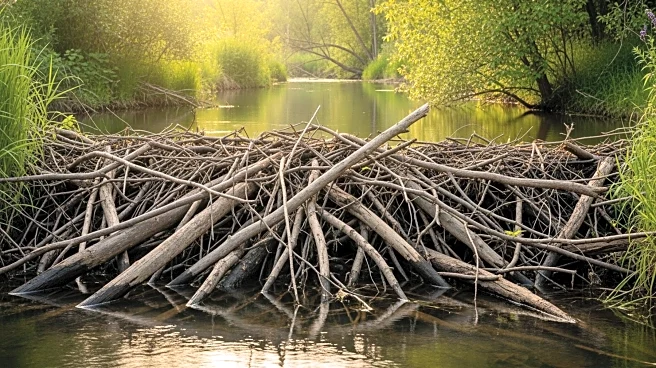
A study published in Communications Earth & Environment reveals that beavers play a significant role in converting stream corridors into persistent carbon sinks. By constructing dams, beavers create ponds and wetlands that alter headwater ecosystems,
leading to increased carbon storage. The research, conducted in a beaver-influenced stream corridor in Switzerland, presents a comprehensive carbon budget covering aqueous and atmospheric exchanges, as well as biomass and sedimentary carbon storages. The study found that the beaver wetland acts as a net carbon sink, driven by subsurface retention of dissolved inorganic carbon and particulate organic carbon burial. The findings highlight the transformative impact of beavers on carbon cycling, with implications for regional carbon fluxes and long-term carbon sequestration.
Why It's Important?
The study underscores the ecological importance of beavers as natural agents of carbon sequestration, offering a nature-based solution to climate change mitigation. By enhancing carbon storage in stream corridors, beavers contribute to reducing atmospheric carbon levels, which is crucial for combating global warming. The research highlights the potential for beaver-modified ecosystems to serve as effective carbon sinks, providing a cost-effective and sustainable approach to carbon management. This has significant implications for environmental policy and conservation strategies, as it emphasizes the need to protect and restore beaver populations and their habitats. The findings also contribute to a better understanding of the role of natural ecosystems in global carbon cycles, informing future climate models and carbon management practices.
What's Next?
The study's findings may prompt further research into the role of beavers and other ecosystem engineers in carbon sequestration. Conservation efforts could focus on protecting and expanding beaver habitats to enhance their ecological benefits. Policymakers may consider incorporating beaver-mediated carbon sequestration into climate action plans and carbon offset programs. Additionally, the research could lead to increased awareness and appreciation of the ecological services provided by beavers, potentially influencing land management and conservation policies. As the understanding of beaver impacts on carbon cycling grows, there may be opportunities to integrate these findings into broader environmental and climate strategies, promoting the use of nature-based solutions in addressing climate change.