






What's Happening?
Virginia farmers are set to receive significant support for sustainable agriculture practices through a nearly $1 million grant from the Chesapeake Bay Foundation. This funding, part of the Chesapeake Small Watershed Grants Program, is managed by the National
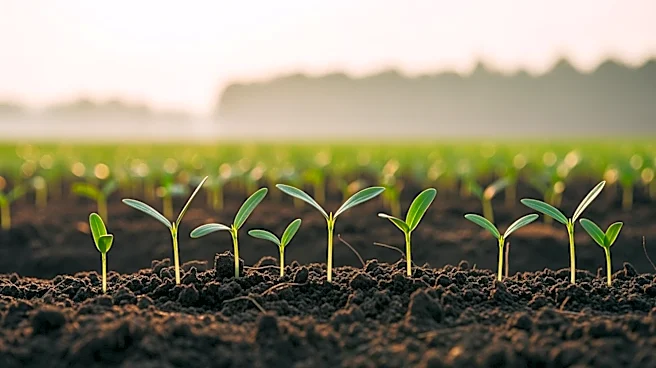
Fish and Wildlife Foundation with support from the U.S. Environmental Protection Agency. The grant aims to help farmers implement regenerative agriculture and conservation practices that enhance farm profitability, land resilience, and reduce pollution into the Chesapeake Bay. Key practices include rotational grazing, planting streamside grass and forested buffers, converting row crops to pasture, and using virtual fence collars for livestock. These collars allow farmers to set grazing boundaries via a phone app, making rotational grazing more accessible and cost-effective. The initiative is a collaboration with the Virginia Forage and Grassland Council, which will provide educational resources and field-based instruction. A grazing school is scheduled in Madison County to further these efforts.
Why It's Important?
This initiative is crucial for promoting sustainable agriculture in Virginia, which can lead to long-term environmental and economic benefits. By adopting these practices, farmers can increase their land's productivity and resilience while contributing to the health of the Chesapeake Bay by reducing agricultural runoff. The grant supports a broader regional effort, extending similar practices to Maryland, Pennsylvania, and West Virginia, covering nearly 1,700 acres. This approach not only aids in environmental conservation but also supports the agricultural economy by making farms more profitable and sustainable. The collaboration between the Chesapeake Bay Foundation and local councils highlights the importance of partnerships in achieving environmental goals.
What's Next?
The next steps involve the implementation of the funded practices and the educational programs planned by the Chesapeake Bay Foundation and the Virginia Forage and Grassland Council. The upcoming grazing school in Madison County will be a key event for educating farmers on sustainable practices. As these initiatives roll out, monitoring and evaluation will be essential to measure their impact on farm profitability and environmental health. The success of this program could serve as a model for similar initiatives in other regions, potentially influencing policy and funding priorities at state and federal levels.