



What's Happening?
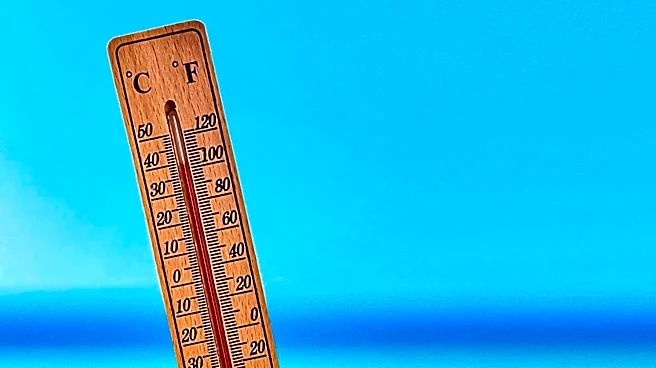
A former chief of the Hong Kong Observatory, Lam Chiu-ying, has criticized the city's heat stress warning system for issuing only the lowest alert during a record-breaking heatwave. On a day when temperatures soared to 39.8 degrees Celsius in Sheung Shui,
the system only triggered an 'Amber' Heat Stress At Work Warning. Lam expressed confusion over the system's failure to activate higher alerts, noting that since its introduction in May 2023, the red and black warnings have never been used. The system, which includes amber, red, and black alerts, is designed to recommend rest arrangements for outdoor workers but is not legally binding. Lam suggested that the system underestimates the impact of solar radiation on outdoor workers and recommended adopting the Wet Bulb Globe Temperature (WBGT) as a more accurate measure.
Why It's Important?
The criticism of the heat stress warning system highlights potential inadequacies in protecting workers from extreme heat, a growing concern as climate change increases the frequency and intensity of heatwaves. The system's failure to issue higher alerts could leave outdoor workers vulnerable to heat-related illnesses, impacting their health and safety. This situation underscores the need for more effective measures and legal protections to ensure worker safety in extreme weather conditions. The broader implications include potential policy changes and increased scrutiny of how governments address climate-related health risks.
What's Next?
The Hong Kong government may face pressure to review and possibly revise the heat stress warning system to better protect workers. This could involve adopting alternative measures like the WBGT, which accounts for solar radiation more accurately. Stakeholders, including labor rights groups and environmental organizations, might advocate for stronger legal protections and enforcement mechanisms. The government may also need to engage with experts and the public to address concerns and improve the system's effectiveness.
Beyond the Headlines
The situation raises questions about the adequacy of current climate adaptation strategies and the need for comprehensive approaches to protect vulnerable populations. It also highlights the intersection of labor rights and environmental policy, emphasizing the importance of integrating climate resilience into occupational health and safety standards. As climate change continues to pose significant challenges, governments worldwide may need to reassess their strategies to safeguard public health and safety.