






What's Happening?
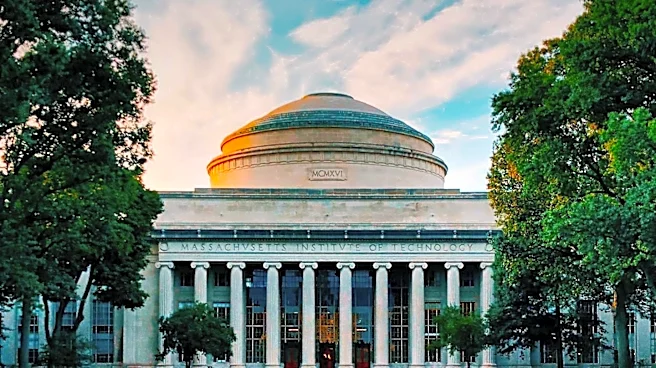
Faculty members at the Massachusetts Institute of Technology (MIT) have successfully pushed back against the administration's plans to implement AI capabilities in campus surveillance cameras. The protest involved a unique form of 'white hat hacking,'
where professors adorned security cameras with rhinestones and googly eyes to draw attention to their concerns without disabling the devices. This action was a response to MIT's exploration of hiring a surveillance technology company, Ambient.ai, to monitor its approximately 4,600 cameras in real-time for active threats. Faculty members, including experts in computer technology, raised significant concerns regarding the potential misuse of video data, risks of misidentification, data access, and a lack of community input in the decision-making process. Following this backlash, MIT's executive vice president and treasurer, Glen Shor, confirmed that the university would not be using AI to observe or analyze campus activity. The initial consideration for enhanced surveillance followed a mass shooting at Brown University, which prompted many campuses to review their security measures.
Why It's Important?
This development at MIT is significant because it highlights a growing tension between security measures and privacy concerns, particularly in academic environments that are often at the forefront of technological development. As a birthplace of AI, MIT's internal debate over its application for surveillance sets a precedent and sends a powerful message about the ethical considerations surrounding advanced technology. The faculty's successful protest underscores the importance of community input and transparency in the deployment of surveillance systems, especially those incorporating AI. It also brings to light the 'surveillance paradox,' where increased camera presence does not necessarily equate to crime prevention, as noted by Matthew Guariglia of the Electronic Frontier Foundation. The decision by MIT to halt AI surveillance reflects a broader societal discussion about the balance between safety, individual liberties, and the potential for algorithmic bias and misuse of data.
What's Next?
While MIT has stated it will not proceed with AI surveillance, the broader discussion about campus security and the role of technology is likely to continue. The university will still utilize its extensive network of 4,600 cameras for traditional security purposes, such as investigating theft, vandalism, and property damage, with footage potentially used for student disciplinary actions with senior police officer approval. However, the 'chilling effect' on free speech due to the sheer scale of surveillance, even without AI, remains a concern for some community members. Other universities may look to MIT's experience as they consider their own security upgrades, potentially leading to more robust community engagement processes before implementing new surveillance technologies. The incident also suggests that technology developers and institutions will face increasing scrutiny regarding the ethical implications and societal impact of AI deployment.
Beyond the Headlines
The MIT faculty's protest goes beyond a simple policy reversal; it represents a critical moment in defining the ethical boundaries of AI implementation, particularly in environments dedicated to intellectual freedom and innovation. The 'bedazzling' act, while whimsical, served as a powerful symbolic critique, questioning whether technology designed for progress should be uncritically applied to surveillance without considering its broader societal implications. This event highlights the responsibility of institutions like MIT, which are instrumental in developing AI, to also lead in establishing ethical frameworks for its use. It underscores the idea that technological advancement must be accompanied by robust public discourse and democratic decision-making to prevent potential dystopian outcomes. The concerns raised about data access, misidentification, and the potential for a 'chilling effect' on free expression point to fundamental questions about privacy, civil liberties, and the future of surveillance in an increasingly AI-driven world.