
What's Happening?
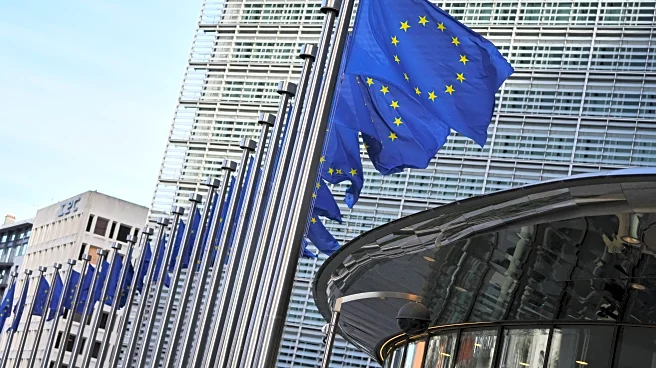
At the Paris Peace Forum, European Union leaders are deliberating on a significant proposal to aid Ukraine by utilizing frozen Russian assets. The plan involves a 90 billion-euro reparations loan, which
would be underwritten by the 210 billion euros of Russian assets currently frozen in Europe. This initiative is part of a broader effort to support Ukraine's economic and military needs over the next two years, as the country faces potential bankruptcy. The European Commission has put forward this proposal, emphasizing its legal soundness, although it has faced criticism from the European Central Bank regarding potential impacts on international trust in the euro. The plan also involves contributions from the U.K., Canada, and Norway to fill any financial gaps. However, the proposal is contentious, with concerns about legal challenges and the potential for Russian reprisals.
Why It's Important?
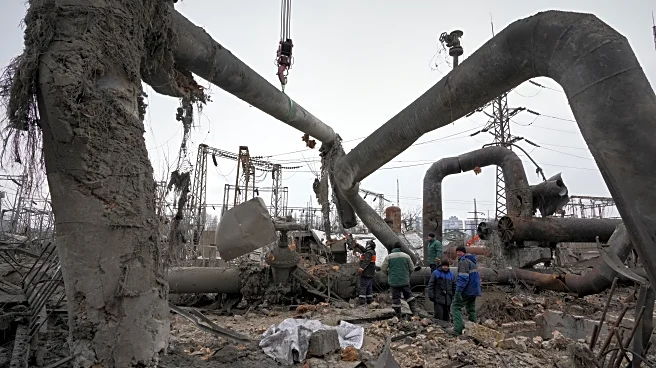
This development is crucial as it represents a bold move by the EU to support Ukraine amidst ongoing conflict with Russia. The decision to use frozen Russian assets could set a precedent for international financial and legal norms, potentially affecting global trust in the euro and the EU's financial stability. The outcome of this proposal could significantly impact Ukraine's ability to sustain its economy and military efforts. Additionally, the plan's success or failure could influence EU unity, as member states like Hungary express opposition, and others like Belgium express concerns about potential repercussions. The decision could also affect international relations, particularly with Russia, and shape future EU policies on asset seizures and reparations.
What's Next?
The EU leaders are expected to continue negotiations at the summit, with European Council President António Costa committed to reaching an agreement, even if it takes several days. The proposal requires a majority vote among EU member states, with Hungary unable to veto it alone. However, the plan's approval remains uncertain, as countries like Belgium, Bulgaria, Italy, and Malta have yet to be convinced. If the reparations loan is not approved, the EU may consider alternative funding methods, such as raising money on international markets. The outcome of these discussions will have significant implications for EU cohesion and its approach to international financial governance.