






What's Happening?
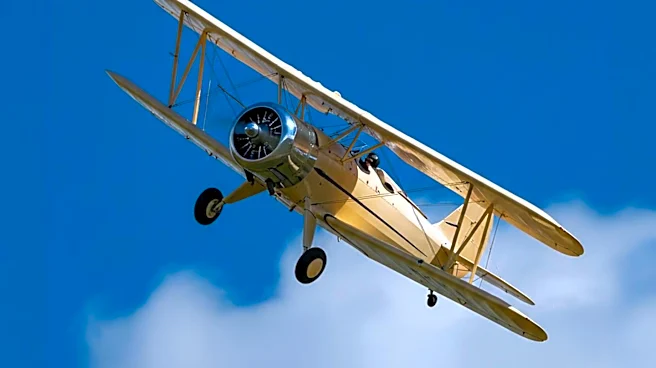
The de Havilland DH.82 Tiger Moth, a two-seat primary trainer biplane, played a crucial role in training tens of thousands of Commonwealth airmen during World War II. Developed from de Havilland’s DH.60 Moth family, the Tiger Moth was designed to meet
the Royal Air Force's requirement for a trainer that allowed the front seat occupant to exit quickly with a parachute. This design modification, which involved moving the upper wing forward and sweeping both wings back slightly, gave the Tiger Moth its distinctive appearance. The prototype first flew on October 26, 1931, and the aircraft entered service with the RAF Central Flying School in February 1932. Over 8,800 Tiger Moths were built across multiple countries, including the UK, Canada, Australia, and New Zealand, and served with more than 25 air forces. Its design was considered forgiving enough for beginners but also highlighted flying mistakes, making it an effective sorting machine for pilot candidates.
Why It's Important?
The de Havilland Tiger Moth's extensive use as a primary trainer during WWII had a profound impact on the Allied war effort, particularly through the British Commonwealth Air Training Plan. This program, which relied heavily on the Tiger Moth, trained over 131,000 aircrew, including nearly 50,000 pilots, significantly bolstering the air forces of the Commonwealth. The aircraft's design, which made it 'easy to fly, hard to fly well,' ensured that only the most capable pilots advanced to more complex aircraft like the Spitfire or Lancaster. Beyond its military significance, the Tiger Moth's post-war availability led to its widespread use in civilian roles such as glider towing, crop spraying, and aerobatics, contributing to the growth of general aviation. Its legacy also includes the development of the DH.82 Queen Bee, a radio-controlled target drone, which is widely credited as the origin of the term 'drone' for unmanned aircraft, a concept that has since revolutionized modern warfare and technology.
What's Next?
While the Tiger Moth was replaced in RAF service by the DHC-1 Chipmunk in the early 1950s, its legacy continues in the form of numerous privately owned and restored aircraft. Upwards of 50 Tiger Moths are still flying in Britain alone, and similar numbers exist globally, participating in airshows, historical reenactments, and private recreational flying. The aircraft remains a cherished piece of aviation history, with museums and enthusiasts dedicated to its preservation and operation. The ongoing restoration and flight of these vintage biplanes ensure that future generations can experience and appreciate the aircraft that trained a generation of wartime pilots. The historical significance of the Tiger Moth also continues to be a subject of study for aviation historians and enthusiasts, further cementing its place in the annals of flight.
Beyond the Headlines
The story of the Tiger Moth extends beyond its technical specifications and wartime service, touching upon broader themes of innovation, adaptation, and human endeavor. Its design evolution, driven by the practical need for pilot safety and effective training, showcases the ingenuity of early 20th-century aviation engineering. The aircraft's role in the British Commonwealth Air Training Plan highlights the immense logistical and collaborative efforts undertaken by Allied nations during WWII. Furthermore, the Tiger Moth's influence on the development of unmanned aerial vehicles, through the Queen Bee, demonstrates how foundational technologies can unexpectedly lead to revolutionary advancements. The continued affection for the Tiger Moth among pilots and the public reflects a romanticized view of early aviation, embodying a spirit of adventure and the foundational skills of flight that are still revered today.