





What's Happening?
Freedom House has adopted the case of Tatiana Kouzina, a Belarusian civil society expert, who is currently imprisoned in Belarus. Kouzina, a prominent researcher and analyst in civil society and public administration, co-founded several research and civic
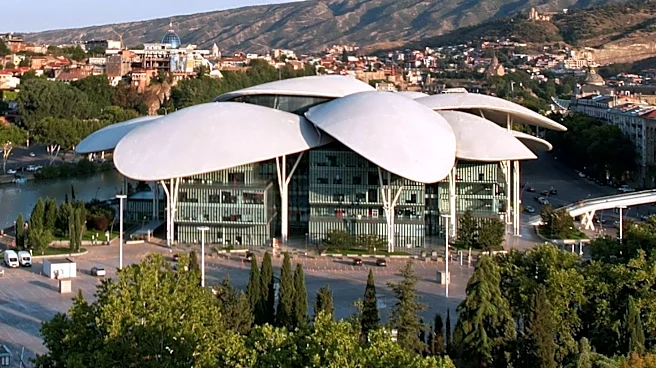
education initiatives in Belarus. She was detained on June 28, 2021, at Minsk National Airport while attempting to travel to Tbilisi, Georgia. After nearly two years in pretrial detention, she was convicted on what Freedom House describes as baseless charges, including calling for actions aimed at harming national security, conspiracy to seize power unconstitutionally, and incitement to hatred. Kouzina was subsequently sentenced to 10 years in prison. Her imprisonment is part of a broader crackdown by the Belarusian regime against civil society, including the research and expert community.
Why It's Important?
The imprisonment of Tatiana Kouzina underscores the severe repression of civil society and freedom of expression under President Alyaksandr Lukashenka's authoritarian rule in Belarus. Freedom House, a non-profit organization dedicated to promoting freedom globally, adopting her case highlights the international concern over human rights abuses in the country. Kouzina's expertise in civil society and public administration makes her a critical voice for independent thought and potential dissent, which the regime actively suppresses. Her conviction on charges like 'conspiracy to seize power' reflects the government's use of broad and vaguely defined laws to silence critics. This situation impacts the ability of Belarusian citizens to engage in civic discourse and advocacy, further isolating the country from democratic norms and international cooperation.
What's Next?
Freedom House is actively advocating for Tatiana Kouzina's immediate and unconditional release. This advocacy will likely involve continued international pressure on the Belarusian government through various diplomatic channels and human rights organizations. The case will serve as a focal point for discussions on the state of human rights in Belarus, potentially influencing international sanctions and diplomatic relations. The broader attack on civil society in Belarus is expected to continue, with the regime likely to maintain its repressive tactics against independent voices. The international community will be watching to see if sustained pressure can lead to any concessions from the Lukashenka regime regarding political prisoners and civil liberties.
Beyond the Headlines
Tatiana Kouzina's case is emblematic of a systemic issue in Belarus where the government actively dismantles any form of independent thought or organization. The regime's targeting of researchers and experts like Kouzina reveals a strategy to eliminate intellectual opposition and control the narrative within the country. This suppression not only stifles dissent but also hinders the development of a robust civil society, which is crucial for democratic governance and social progress. The long-term implications include a brain drain as educated individuals flee the country, further weakening Belarus's intellectual capital and its potential for future democratic reforms. The international community's response to such cases will set precedents for how authoritarian regimes are held accountable for human rights violations.