




What's Happening?
Florida Governor Ron DeSantis has blocked the use of license plate readers on state roads, citing concerns about a potential 'surveillance state' and the misuse of personal movement data. This decision comes despite DeSantis having approved approximately
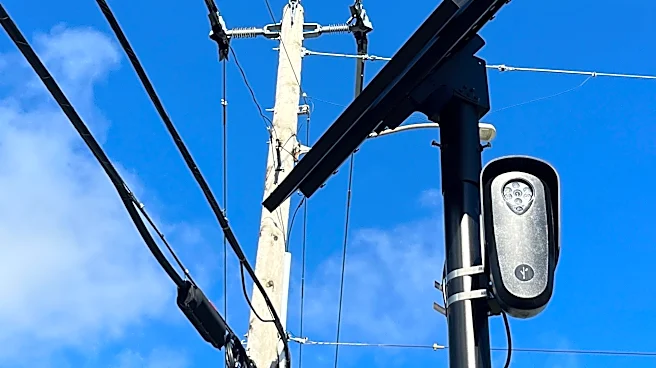
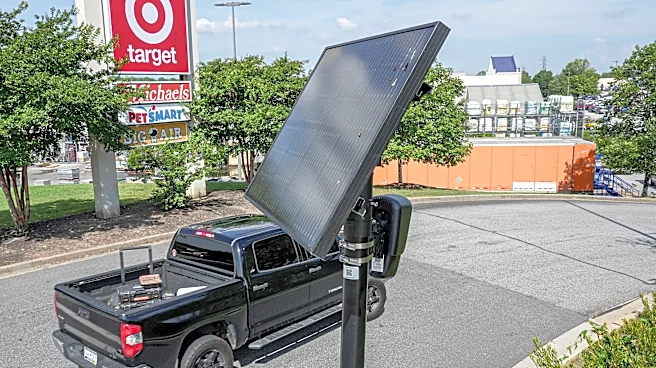
$4.6 million in requests from local law enforcement agencies for these very devices over the past year, specifically for illegal immigration enforcement efforts. The State Board of Immigration Enforcement, which includes DeSantis and other state officials, has approved about $147 million in grants from a $250 million fund for local police related to illegal immigration enforcement, with $21 million already disbursed. The cameras, manufactured by companies like Flock Safety, utilize artificial intelligence to track vehicles, detect make, model, color, and speed, and can operate in low-light conditions. Law enforcement agencies had been transparent about their intent, with some, like St. Johns County, planning to deploy them in high-traffic areas such as I-95 to detect human smuggling and store data for up to a year to develop 'patterns of life' for enforcement actions.
Why It's Important?
Governor DeSantis's reversal on license plate readers highlights a significant tension between public safety and privacy concerns, particularly regarding government surveillance technology. While the initial funding was aimed at enhancing law enforcement capabilities, especially in illegal immigration enforcement, the governor's recent stance underscores growing apprehension about data privacy and the potential for abuse. This shift could impact the operational strategies of local law enforcement agencies that had planned to rely on these systems, potentially requiring them to find alternative methods for tracking suspects and enforcing immigration laws. The debate also brings to the forefront the broader implications of AI-powered surveillance tools, raising questions about their ethical use, data retention policies, and the balance between security measures and individual liberties. The decision could set a precedent for how other states approach similar technologies, influencing future policy discussions on surveillance and privacy nationwide.
What's Next?
Following the Florida Department of Transportation's memo withdrawing authority for cameras on state roads, local law enforcement agencies that previously received permits must remove them within 30 days. The FDOT will also cease issuing future requests for license plate reader systems within its jurisdiction. Several agencies, including the Brevard County Sheriff’s Office and Bradford County Sheriff’s Office, have already announced they will terminate their use of Flock camera data and remove the devices. Some, like Bradford County, are extending the ban to all license plate readers throughout their entire county, not just state roads. This immediate action indicates a rapid shift in policy implementation across Florida. The long-term implications may include a re-evaluation of funding priorities for law enforcement technology and potential legal challenges or legislative efforts to further define the scope of surveillance in the state. The governor's office has not yet responded to requests for comment on the matter.
Beyond the Headlines
The controversy surrounding license plate readers in Florida delves into deeper ethical and legal considerations regarding the 'surveillance state' and the erosion of privacy. Governor DeSantis's concern about companies selling movement data for advertising and product placement highlights the commercialization of personal information, even when collected for law enforcement purposes. Reports of misuse by police, such as an officer in Sarasota charged with felonies for misusing the system and another in Haines City repeatedly searching for his ex-wife's license plate, underscore the potential for abuse of power and the lack of adequate safeguards. This situation reflects a broader national debate on how advanced technologies, particularly those with AI capabilities, can be deployed responsibly without infringing on civil liberties. The bipartisan backlash against such misuse suggests a growing public demand for transparency, accountability, and robust regulatory frameworks to govern surveillance technologies, potentially leading to more stringent privacy laws and oversight mechanisms in the future.