





What's Happening?
A new public art initiative in Boston's Little Saigon Cultural District aims to commemorate the histories of Vietnamese refugees and their contributions to American society. Led by Ngoc-Tran Vu, a Vietnamese multimedia artist, the project titled '1975:
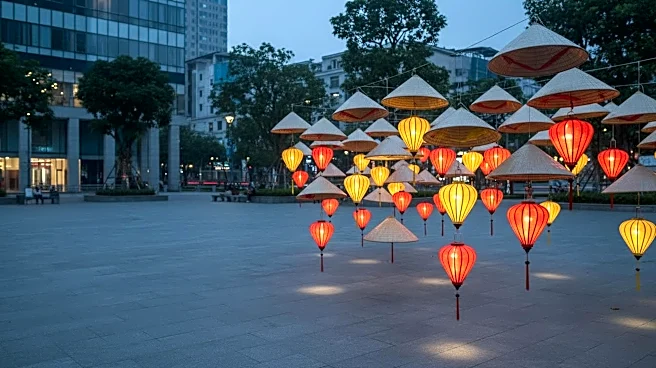
A Vietnamese Diaspora Memorial' seeks to create a permanent installation that honors the experiences of Vietnamese refugees. The initiative is part of a broader effort to ensure that the stories of displacement, survival, and community rebuilding are recognized and remembered in public spaces. The project has already seen a temporary installation, 'Journey of Light: A 1975 Memory Field,' which featured traditional Vietnamese hats, lanterns, and bilingual storytelling.
Why It's Important?
This initiative is crucial in addressing the often-overlooked narratives of Vietnamese refugees in the United States. By creating a visible and lasting memorial, the project not only honors the past but also educates the public about the significant impact of Vietnamese communities on American culture and society. Public art plays a vital role in shaping collective memory and fostering a more inclusive understanding of history. This project highlights the importance of recognizing diverse cultural contributions and the need for public spaces that reflect the histories of all communities, particularly those that have faced displacement and adversity.
What's Next?
The project team is advocating for public land access and financial support to establish a permanent memorial in Boston. As the initiative progresses, it will be important to engage with local communities and stakeholders to ensure the memorial accurately represents the experiences and contributions of Vietnamese refugees. The success of this project could inspire similar efforts in other cities, promoting a more inclusive approach to public memory and cultural representation. Additionally, the initiative may encourage policymakers and cultural institutions to allocate more resources towards projects that highlight the histories of marginalized communities.