





What's Happening?
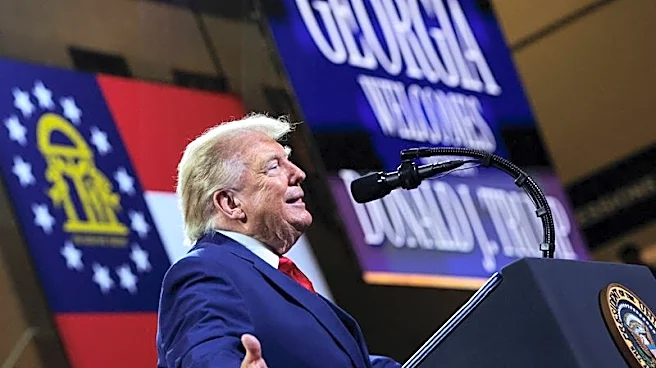
President Trump has sparked controversy by suggesting he might run for a third term, despite the 22nd Amendment barring U.S. presidents from serving more than two terms. During a speech at the Environmental Protection Agency headquarters, Trump expressed
his desire to continue as president, which has led to widespread criticism and debate. Social media users and political commentators have reacted strongly, highlighting the constitutional limitations and questioning the feasibility of such a move. Trump's comments have reignited discussions about his influence and intentions as he continues to assert his political presence.
Why It's Important?
Trump's remarks about a potential third term challenge the constitutional framework of U.S. presidential terms and raise concerns about democratic norms. The 22nd Amendment was established to prevent prolonged presidential tenures, and any attempt to circumvent it could have significant legal and political implications. Trump's statements also reflect his ongoing influence within the Republican Party and his ability to shape political discourse. The controversy underscores the polarized nature of U.S. politics and the challenges of maintaining constitutional integrity in the face of populist rhetoric.
What's Next?
The debate over Trump's third term remarks is likely to continue, with potential legal challenges and political ramifications. As the 2028 presidential election approaches, discussions about term limits and democratic principles may become more prominent. Trump's influence on the Republican Party and his potential role in future elections will be closely monitored by political analysts and stakeholders. The situation highlights the importance of upholding constitutional norms and the potential consequences of political rhetoric that challenges established democratic processes.