





What's Happening?
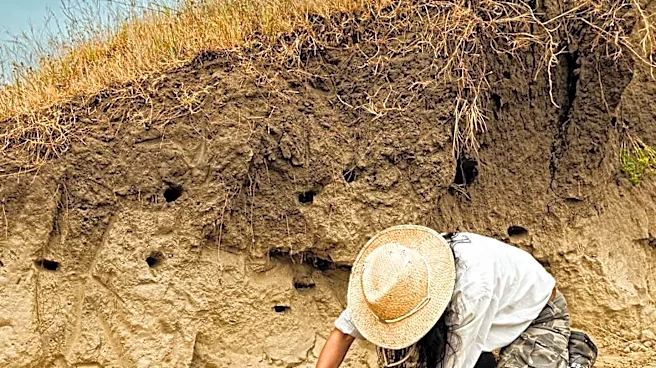
Construction workers in Azerbaijan's Jalilabad district have uncovered ancient artifacts while building a new park, leading to a halt in earthworks. The discovery, made in an area known as 'Nar Bagi' or 'Pomegranate Garden,' includes large storage jars
and other cultural artifacts believed to date back to an ancient period. The Azerbaijani Institute of Archaeology and Anthropology is currently examining the site to determine the significance and historical value of the findings. Detailed archaeological and laboratory analyses are underway to ascertain the exact age and importance of the artifacts.
Why It's Important?
The discovery of ancient artifacts in Jalilabad highlights the rich historical and cultural heritage of Azerbaijan, which could have significant implications for the country's tourism and educational sectors. Such findings can attract archaeologists, historians, and tourists, potentially boosting local economies. Additionally, the preservation of these artifacts is crucial for understanding the region's history and cultural evolution. The halt in construction also underscores the importance of balancing development with heritage conservation, ensuring that modern infrastructure projects do not come at the expense of historical preservation.
What's Next?
The next steps involve detailed archaeological and laboratory analyses to determine the artifacts' age and historical value. The findings could lead to further excavations and studies, potentially uncovering more about the region's ancient history. The Azerbaijani government and local authorities may also consider developing the site into a cultural heritage location, which could enhance tourism and educational opportunities. Stakeholders, including archaeologists, historians, and policymakers, will likely engage in discussions on how best to preserve and utilize the site for cultural and educational purposes.