




What's Happening?
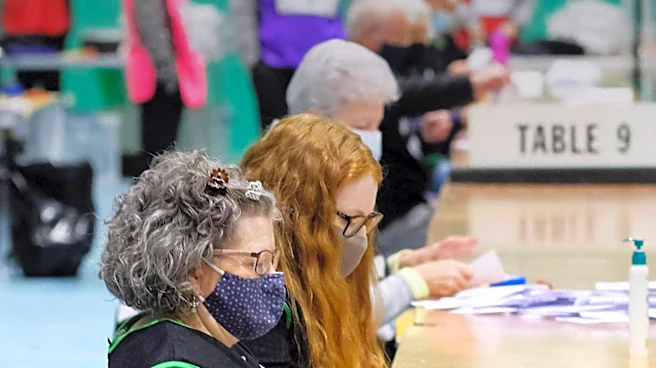
Alaskans participated in the August 18 primary election, casting votes for governor, U.S. Senate, U.S. House, and 50 out of 60 seats in the Alaska Legislature. Additionally, voters considered Ballot Measure 1, which proposes to re-establish limits on campaign
contributions in state-level races. Under Alaska's nonpartisan open primary system, voters select one candidate per race, with the top four vote-getters advancing to the November general election. The Anchorage Daily News reported that preliminary results were updated as of 7:20 a.m. on Wednesday, August 19, and will continue to be updated as more ballots are counted. The election process allows for a broad field of candidates to move forward, ensuring diverse representation in the general election. The focus now shifts to the ongoing tabulation of ballots and the eventual certification of candidates for the upcoming general election.
Why It's Important?
This primary election is crucial for shaping Alaska's political landscape for the coming years, impacting representation at both federal and state levels. The outcomes will determine the candidates who will compete in the November general election for key positions, including the governorship and seats in the U.S. Congress. Ballot Measure 1, if passed, could significantly alter the dynamics of campaign finance in Alaska by reinstating contribution limits, potentially reducing the influence of large donors and promoting a more equitable playing field for candidates. This measure reflects a broader national conversation about campaign finance reform and its role in democratic processes. The nonpartisan open primary system itself is noteworthy, as it allows all registered voters to participate regardless of party affiliation, fostering broader engagement and potentially leading to more moderate candidates advancing. The results will set the stage for the general election, influencing policy decisions and legislative priorities in Alaska.
What's Next?
The Alaska Division of Elections will continue to count additional ballots from the August 18 primary election. The Anchorage Daily News has committed to updating its preliminary results page as new ballot counts become available. Once all ballots are tallied and certified, the top four vote-getters in each race will officially advance to the November general election. This period will likely involve candidates refining their campaign strategies, engaging in further public outreach, and preparing for debates. For Ballot Measure 1, the final vote count will determine whether campaign contribution limits are reinstated, which could lead to immediate adjustments in fundraising practices for state-level campaigns. Political parties and independent groups will also begin to mobilize their resources in anticipation of the general election, focusing on voter registration and get-out-the-vote efforts.
Beyond the Headlines
The implementation of Alaska's nonpartisan open primary system, which allows the top four vote-getters to advance, represents a significant departure from traditional partisan primary models. This system aims to foster greater voter participation and potentially elect candidates who appeal to a broader base, rather than just a party's core constituents. However, it also introduces complexities, such as the potential for multiple candidates from the same party to advance, which could split votes in the general election. The debate surrounding Ballot Measure 1 highlights ongoing concerns about money in politics and the desire for greater transparency and fairness in elections. If passed, it could serve as a model or precedent for other states considering similar reforms. The long-term impact of these electoral reforms on political polarization and voter engagement in Alaska will be a key area to observe.