



What's Happening?
Shrimp are decapod crustaceans, characterized by having ten legs, with approximately 2,000 to 3,000 known species globally. These marine creatures exhibit a wide range of sizes, from the tiny idiomysis shrimp, measuring 3-5 millimeters, to the large tiger
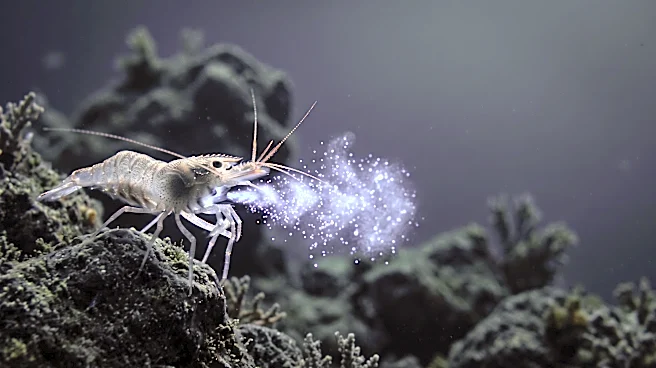
shrimp, which can reach 12 inches in length and weigh up to a pound. Many shrimp species possess remarkable biological adaptations, such as bioluminescence, a chemical process that allows about 150 species to produce light, particularly in deep-sea environments. An example is the fire-breathing shrimp, which expels a luciferin-containing chemical that reacts with oxygen to create a defensive flash of blue light. Another notable species is the pistol shrimp, known for its ability to create a superheated cavitation bubble with its specialized claw, generating extreme heat, light, and one of the loudest sounds in the animal kingdom. Shrimp also form symbiotic relationships, such as cleaner shrimp removing parasites from fish, and pistol shrimp cooperating with goby fish for protection and shelter.
Why It's Important?
The diversity and unique biological mechanisms of shrimp highlight the complexity and adaptability of marine life, offering insights into evolutionary biology and ecological interactions. The pistol shrimp's cavitation ability, for instance, presents a natural phenomenon with potential implications for biomimicry in fields like acoustics or material science. Furthermore, the symbiotic relationships observed in cleaner shrimp and pistol shrimp demonstrate intricate interspecies dependencies crucial for ecosystem stability, particularly in coral reef environments. From a human perspective, shrimp are a significant global food source, valued for their taste and nutritional content, being low in calories and high in protein. Their widespread consumption supports a substantial fishing and aquaculture industry, impacting economies and livelihoods worldwide. Understanding shrimp biology and ecology is vital for sustainable management of these resources and for preserving marine biodiversity.
What's Next?
Continued research into shrimp biology, particularly their unique adaptations like bioluminescence and cavitation, could lead to advancements in various scientific and technological fields. For instance, studying the chemical processes behind bioluminescence might inspire new lighting technologies or medical imaging techniques. Further investigation into the pistol shrimp's claw mechanism could inform developments in underwater acoustics or cavitation-based technologies. In aquaculture, ongoing efforts to understand shrimp nutrition and disease resistance are crucial for improving farming practices, ensuring sustainable production, and meeting global demand. Conservation efforts will also focus on protecting shrimp habitats, especially vulnerable ecosystems like coral reefs, to maintain biodiversity and the ecological services these species provide. The culinary industry will likely continue to innovate with shrimp, exploring new preparation methods and dishes, while consumers will benefit from their nutritional value.
Beyond the Headlines
The intricate design and specialized functions of shrimp, such as the pistol shrimp's 'shrimpoluminescence' and the fire-breathing shrimp's defensive light, challenge conventional understandings of biological capabilities in small organisms. These phenomena underscore the vast, unexplored potential within marine ecosystems for scientific discovery and technological inspiration. The symbiotic relationships, like that between the pistol shrimp and goby fish, illustrate a profound level of interdependency in nature, suggesting that cooperation is a fundamental strategy for survival in complex environments. Ethically, the widespread consumption of shrimp raises questions about sustainable fishing practices and the environmental impact of aquaculture, prompting discussions on responsible sourcing and ecological footprint. Culturally, shrimp have become a staple in cuisines worldwide, reflecting globalized food systems and diverse culinary traditions. Their story is not just about a food item but about a creature that embodies remarkable biological engineering and ecological significance.