
What's Happening?
Vietnam's industrial real estate market is experiencing a resurgence, driven by a combination of recovering manufacturing activities, robust foreign direct investment (FDI) inflows, and accelerated infrastructure
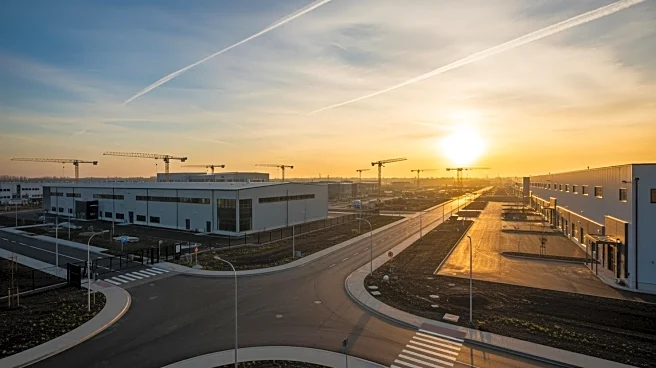
development. Recent data indicates that in the first 11 months of 2025, registered FDI reached nearly USD 33.7 billion, with disbursed capital totaling approximately USD 23.6 billion, marking the highest level in five years. This growth reflects sustained investor confidence despite global trade volatility and geopolitical uncertainties. The market has seen a stabilization in manufacturing sentiment, with improvements in Vietnam's Purchasing Managers' Index and EuroCham's Business Confidence Index. Industrial developers report renewed lease negotiations and land handovers, with high demand for ready-built factories and warehouses. Key industrial corridors are witnessing rising rental prices and high occupancy rates. Infrastructure projects, such as those by KCN Vietnam, are focusing on sustainable development, with several projects achieving LEED Gold certification.
Why It's Important?
The rebound in Vietnam's industrial property market is significant for several reasons. It underscores the country's growing role as a regional production and logistics hub, benefiting from large-scale infrastructure investments and shifts in global supply chains. The sustained FDI inflows and infrastructure development are likely to enhance Vietnam's attractiveness to international investors, particularly in high-value sectors like electronics and technology. This growth could lead to increased economic activity and job creation, further solidifying Vietnam's position in the global industrial landscape. The focus on sustainable development also aligns with global trends towards environmentally responsible business practices, potentially setting a benchmark for other emerging markets.
What's Next?
Looking ahead, Vietnam's industrial property sector is expected to continue benefiting from ongoing infrastructure investments and administrative restructuring. The introduction of new product formats, such as two-storey factory buildings, aims to cater to small and medium-sized enterprises, expanding the market's appeal. Projects under construction, like KCN An Phat in Hai Phong, are anticipated to add significant factory and warehouse space by mid-2026. Analysts predict that these developments will reinforce Vietnam's role as a key player in the global supply chain, attracting further investment and fostering economic growth.
Beyond the Headlines
The emphasis on sustainable industrial development in Vietnam could have broader implications for the region. As more projects achieve certifications like LEED Gold, there may be increased pressure on other countries to adopt similar standards, potentially leading to a regional shift towards greener industrial practices. This focus on sustainability could also influence global supply chain strategies, as companies seek to align with environmentally responsible partners. Additionally, Vietnam's success in attracting FDI and developing its industrial infrastructure could serve as a model for other emerging markets looking to enhance their economic competitiveness.