



What's Happening?
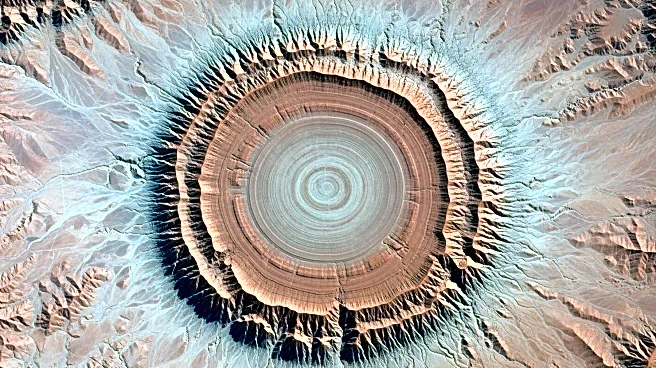
The Richat Structure, also known as the Eye of the Sahara, has been captured in stunning detail by the European Space Agency's Copernicus Sentinel-2 satellite. This geological formation, located in the Sahara Desert of Mauritania, spans approximately
31 miles and appears as a series of concentric circles from space. Initially thought to be a meteorite impact site, further research revealed it to be a deeply eroded geological dome. The structure's unique appearance is due to the erosion of softer rocks, leaving behind harder, more resistant layers. This natural wonder continues to intrigue scientists and serves as a prominent landmark for astronauts.
Why It's Important?
The Richat Structure's visibility from space highlights the power of satellite technology in studying Earth's geological features. Understanding such formations provides insights into the planet's geological history and the processes that shape its surface. The structure's distinct appearance also serves as a reminder of the dynamic forces at work beneath the Earth's crust. This discovery emphasizes the importance of continued exploration and study of remote and unique geological sites, which can offer valuable information about Earth's past and inform future scientific research.