



What's Happening?
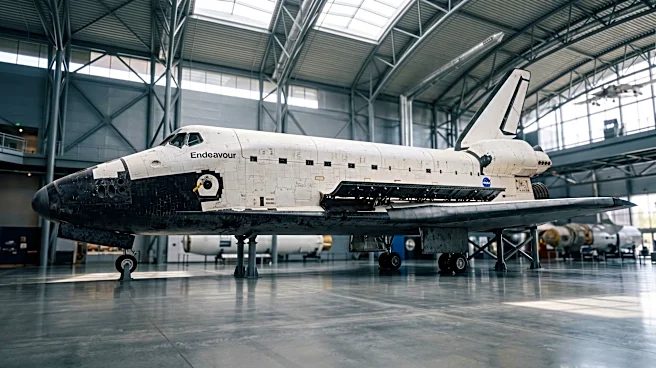
California Governor Newsom has welcomed the public to the opening of the Samuel Oschin Air and Space Center, which features the Space Shuttle Endeavour. This new center highlights California's extensive contributions to space exploration, from the development
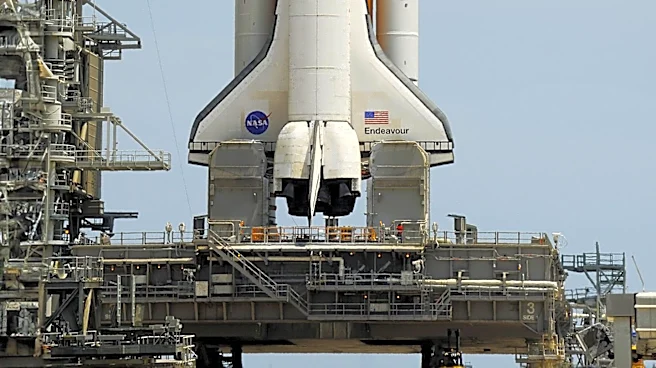
of the Voyager spacecraft and Mars rovers by JPL in Pasadena to the assembly of the Hubble and James Webb Space Telescopes. The state has been a pivotal hub for aerospace innovation, with facilities like Ames Research Center and Armstrong Flight Research Center playing key roles in NASA's research and development. The Endeavour, which completed 25 missions including building the International Space Station and servicing the Hubble Space Telescope, was manufactured and assembled in Southern California. Its permanent home at the California Science Center aims to preserve and showcase this rich aerospace history.
Why It's Important?
California's dominance in the aerospace sector is significant for the U.S. economy and its leadership in space exploration. The state accounts for one-third of the nation's space technology companies, holds the highest concentration of aerospace talent, and leads in corporate aerospace R&D spending and space-technology venture capital. This robust ecosystem fuels innovation, creating numerous jobs and contributing an estimated $35 billion annually to California's GDP. The state's educational institutions also form the nation's most productive pipeline for aerospace talent, ensuring a continuous supply of skilled professionals. This concentration of expertise and resources is crucial for advancing national space initiatives, including NASA's Artemis program, and maintaining the U.S.'s competitive edge in the global space industry.
What's Next?
California is actively investing in its aerospace and defense sector to ensure continued growth and innovation. Under Governor Newsom’s California Jobs First Economic Blueprint, aerospace and defense is designated as an 'accelerate' sector, receiving targeted public and private investments. Recent awards include $16.95 million for projects in the Central Coast and an additional $19 million for initiatives in Kern County, the Southern Border, and the Bay Area, focusing on infrastructure, ecosystem services, and workforce development. Furthermore, several aerospace companies, such as Mach Industries, Apex Space, and Vast, have received California Competes Tax Credits, leading to significant investments and job creation. These ongoing efforts aim to strengthen California's position as a leader in space technology and manufacturing, supporting future missions and technological advancements.
Beyond the Headlines
The concentration of aerospace innovation in California has broader implications beyond economic output and technological advancement. It fosters a culture of scientific inquiry and engineering excellence that inspires future generations. The presence of iconic artifacts like the Space Shuttle Endeavour in public centers serves as a tangible link to humanity's quest for exploration, encouraging STEM education and careers. This sustained investment in aerospace also reinforces national security through advancements in defense technology and space-based intelligence. Moreover, California's role in developing critical space infrastructure, from communication networks to Earth observation satellites, underpins numerous aspects of modern life, from weather forecasting to global connectivity, demonstrating the far-reaching impact of its aerospace leadership.