



What's Happening?
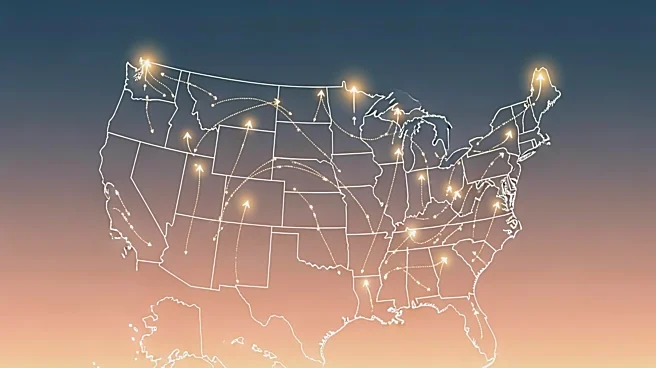
Hummingbirds are migrating further north than usual this spring, with sightings reported as far north as New Jersey and North Carolina. According to Hummingbird Central's interactive migration map, these birds have been spotted across the Gulf Coast and are expected
to continue moving north as temperatures rise. The migration is believed to be influenced by longer daylight hours and the availability of flowers, nectar, and insects. Hummingbirds travel alone, often covering up to 500 miles at a time at speeds of 20 to 30 mph. The National Audubon Society provides tips for attracting these birds to gardens, emphasizing the importance of native flowering plants, perches, and water sources.
Why It's Important?
The northward migration of hummingbirds is a significant indicator of changing environmental conditions, possibly linked to climate change. As these birds move into new areas, they can impact local ecosystems by pollinating plants and affecting insect populations. For bird enthusiasts and gardeners, the migration offers an opportunity to observe and support these species by creating hospitable environments. The data collected from migration maps can also aid scientists in understanding broader ecological shifts and the effects of climate change on wildlife patterns.
What's Next?
As temperatures continue to rise, hummingbirds are expected to become more common in central and eastern states by May. Birdwatchers and conservationists will likely monitor these patterns closely to assess the long-term impacts on local ecosystems. Efforts to educate the public on how to attract and support hummingbirds in their gardens may increase, promoting biodiversity and environmental awareness. The ongoing collection of migration data will be crucial for future research and conservation strategies.