





What's Happening?
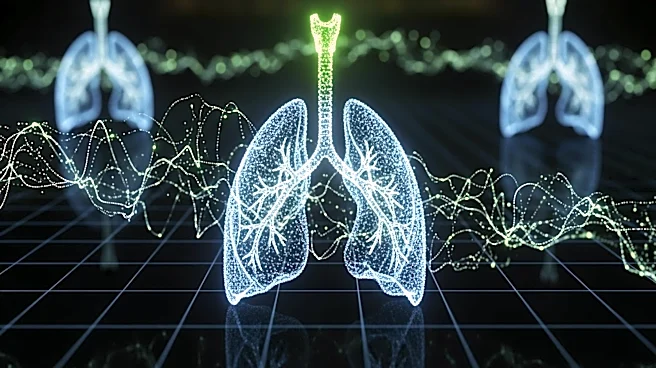
Researchers at Memorial Sloan Kettering Cancer Center have made significant strides in understanding the early stages of tumor formation in lung tissue. Their study, published in Nature, highlights how mutant cells with KRAS mutations interact with surrounding
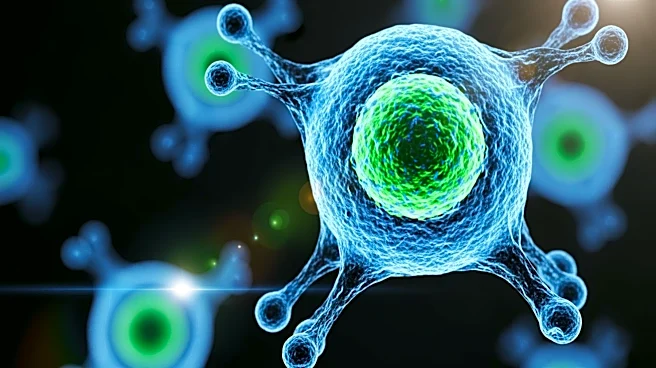
healthy cells to create a microenvironment conducive to tumor growth. This research challenges the traditional view of cancer as merely the uncontrolled proliferation of mutated cells, emphasizing instead the role of the tumor microenvironment. Using advanced lineage-tracing techniques in mouse models, the study reveals that KRAS-mutant cells initiate a 'neighborhood remodeling' process, involving stromal and immune compartments, to support tumor development. The findings suggest that the tumor microenvironment, including fibroblasts and immune cells, plays a crucial role in cancer progression.
Why It's Important?
This study provides a new perspective on cancer treatment by focusing on the tumor microenvironment rather than just the cancer cells themselves. By understanding the interactions between mutant cells and their surroundings, researchers can develop more effective therapies that target these interactions. The study's findings could lead to the development of early diagnostic tools and preventive therapies, potentially allowing for interventions before tumors become invasive or metastatic. This approach could revolutionize cancer treatment, offering new avenues for targeting the supportive cells that foster malignancy, thereby improving patient outcomes.
What's Next?
The research opens the door for further studies to explore the potential of targeting the tumor microenvironment in cancer therapy. By disrupting the communication between mutant cells and their surroundings, it may be possible to halt tumor progression. The study also suggests that existing therapies, such as EGFR inhibitors, could be repurposed to target the tumor microenvironment, offering new treatment options for patients. Additionally, the development of biomarkers reflective of microenvironmental changes could aid in early detection and intervention, particularly in high-risk populations.