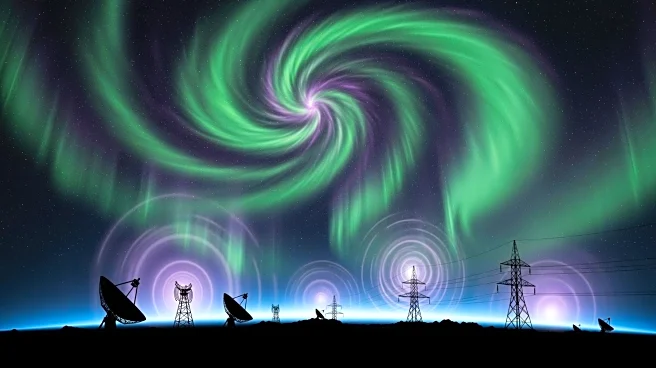




What's Happening?
A powerful G4 geomagnetic storm has struck Earth, triggered by a coronal mass ejection (CME) from an X1.9 solar flare. The storm arrived earlier than expected, causing widespread auroral displays and posing risks to satellite networks, power grids, and high-frequency
communications. The CME, originating from sunspot region AR4341, has led to radio blackouts and increased geomagnetic activity. The NOAA Space Weather Prediction Center has confirmed the storm's impact, with geomagnetic indices reaching severe levels. The event highlights the challenges in predicting solar outbursts and the potential for significant disruptions to critical infrastructure.
Why It's Important?
The geomagnetic storm poses a threat to various sectors, including satellite operations, aviation, and power grids. The increased geomagnetic activity can degrade GPS accuracy, induce currents in power lines, and elevate satellite drag, affecting low-Earth orbit assets. The storm's impact on transpolar flights and precision farming reliant on GPS further underscores the vulnerability of modern infrastructure to space weather events. The early arrival of the storm highlights the need for improved forecasting and preparedness among operators of critical systems.
What's Next?
Operators of critical infrastructure are advised to remain vigilant as the storm continues. The NOAA SWPC has issued ongoing alerts and updates, with the potential for further geomagnetic activity in the coming days. The visibility of auroras across the U.S. provides a unique opportunity for skywatchers, though clear skies and minimal light pollution are necessary for optimal viewing. As solar maximum volatility persists, further solar flares and CMEs are possible, necessitating continued monitoring and preparedness.