
What's Happening?
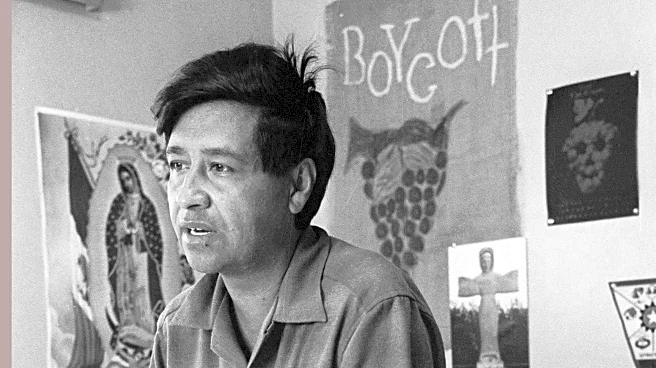
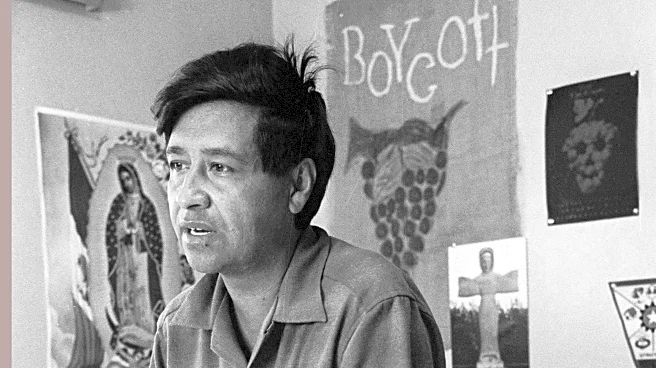
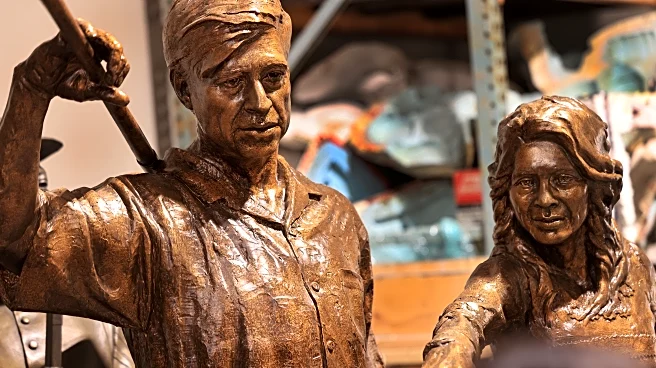
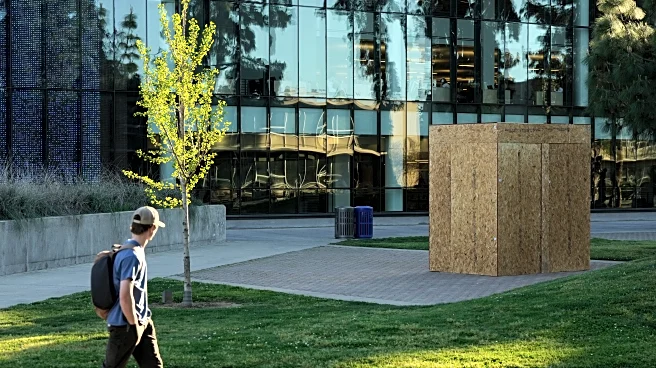
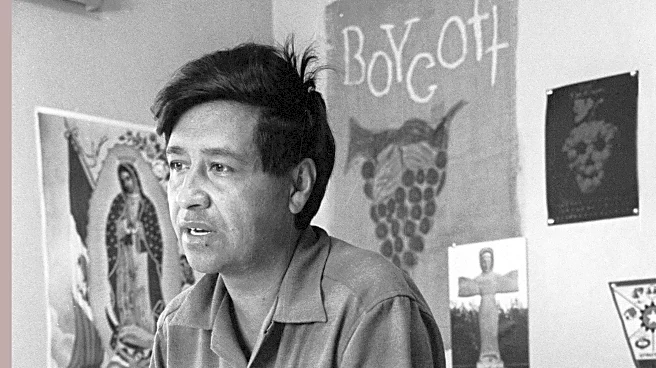
In California, a significant movement is underway to remove public tributes to Cesar Chavez, a once-revered labor leader. Statues are being dismantled, street names changed, and murals covered as officials respond to newly surfaced allegations about Chavez's
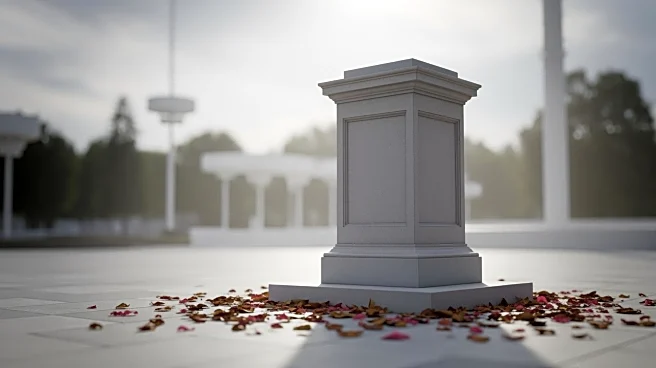
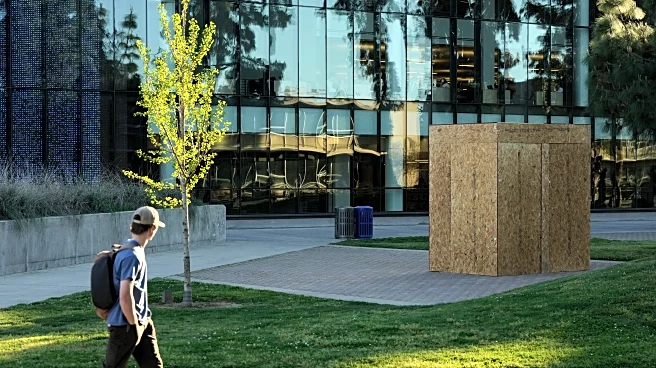
conduct. This backlash is part of a broader effort to reassess public honors tied to his legacy. In San Fernando, a statue of Chavez was recently removed, while Santa Ana College has covered murals depicting him. Fresno city leaders have voted to restore the original name of a major boulevard previously named after Chavez. These actions reflect a rapid shift in how Chavez's contributions are viewed, with more institutions expected to follow suit.
Why It's Important?
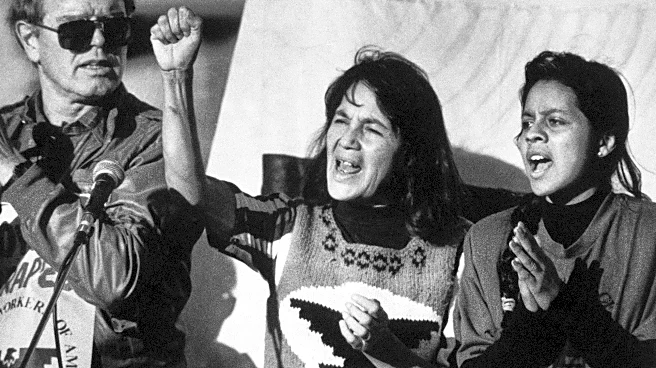
The removal of tributes to Cesar Chavez highlights a growing trend of re-evaluating historical figures and their legacies in public spaces. This movement has significant implications for how communities honor past leaders, particularly those with complex histories. For decades, Chavez was celebrated for his role in the United Farm Workers and as a symbol of Latino empowerment. However, the current scrutiny and subsequent actions may alter public perception and historical narratives. The debate over these removals also underscores tensions between preserving cultural heritage and addressing contemporary ethical standards. Communities are divided, with some viewing the actions as erasure of Latino history, while others see them as necessary for accountability.
What's Next?
As more local governments and educational institutions in California review their public spaces, the trend of removing Chavez-related honors is likely to continue. This could lead to further debates and decisions about how to handle other historical figures with controversial legacies. The ongoing reassessment may prompt broader discussions about the criteria for public commemoration and the role of community input in these decisions. Stakeholders, including political leaders, community groups, and educational institutions, will need to navigate these complex issues, balancing historical recognition with evolving societal values.
Beyond the Headlines
The actions taken against Chavez's legacy in California may set a precedent for how other states and communities address similar issues. This could lead to a nationwide re-evaluation of public monuments and honors, particularly those related to figures with contested histories. The situation also raises questions about the processes and criteria used to determine public honors, potentially influencing future policies on cultural and historical recognition. Additionally, the debate may impact Latino communities, affecting how they engage with their history and advocate for representation in public spaces.