




What's Happening?
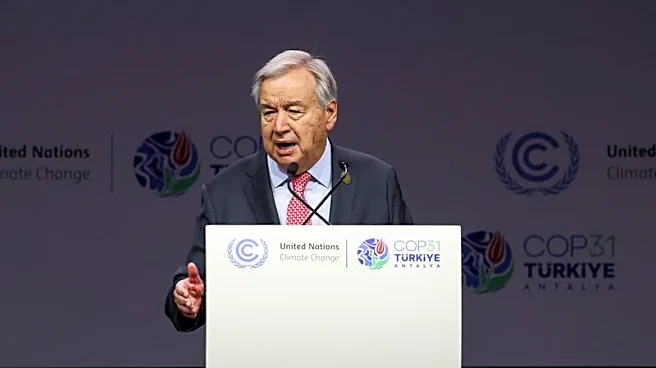
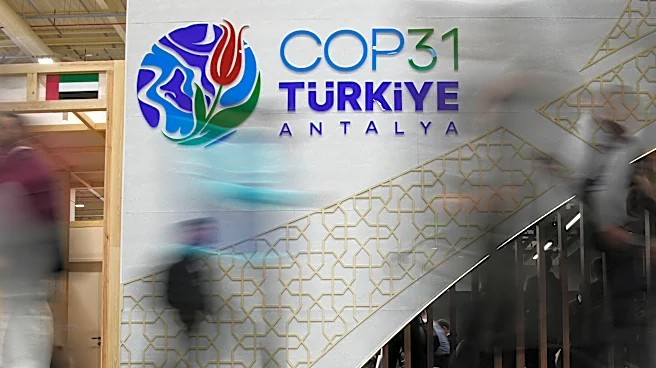
Francesco La Camera, Director-General of the International Renewable Energy Agency (IRENA), announced that a roadmap on electrification will be a central outcome of COP31. Speaking at the Global Renewables Hub in Antalya, La Camera emphasized the Turkish
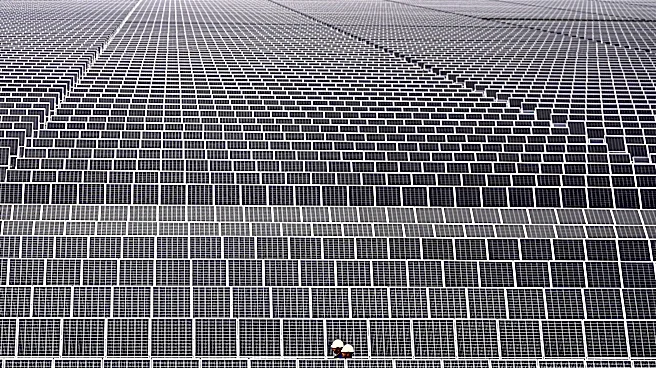
presidency's target to electrify 35% of the planet by 2035. This target aligns with IRENA's reports, which have provided the analytical basis for both the Turkish pledge and Brazil's initiative on the transition away from fossil fuels (TAFF). The roadmap aims to bring the world back in line with the Paris Agreement targets, considering that the 1.5-degree threshold has already been exceeded. While progress on tripling renewable energy capacity by 2030 is on track, reaching an estimated 11.2 terawatts, La Camera noted that energy efficiency is lagging, creating a potential gap between supply and demand that electrification is intended to address.
Why It's Important?
The focus on electrification at COP31, driven by IRENA's roadmap, signifies a critical shift in global climate strategy. For the U.S., this emphasis on interconnected and flexible grids, as highlighted by IRENA, underscores the need for significant infrastructure investment to support renewable energy integration. The potential for a widening gap between energy supply and demand due to lagging energy efficiency could necessitate accelerated U.S. efforts in both renewable deployment and grid modernization. The global push for electrification also presents opportunities for U.S. companies in renewable energy technology, smart grid solutions, and energy storage. Conversely, if the U.S. does not keep pace with these global electrification targets, it could face economic disadvantages and challenges in meeting its own climate commitments, potentially impacting its standing in international climate negotiations and its ability to attract green investments.
What's Next?
The adoption of the 35% electrification target by 2035 at COP31 will likely lead to increased international pressure and collaboration on grid development and renewable energy deployment. IRENA's continued focus on grids as the primary bottleneck for accelerating electrification suggests that future policy discussions will heavily involve financing mechanisms for infrastructure, particularly in developing countries. The next IRENA report will also focus on hydrogen, especially green hydrogen, indicating a future direction for renewable energy development. For the U.S., this means a continued need to invest in grid modernization, explore hydrogen as an energy solution, and potentially engage in international partnerships to support global electrification efforts. The ongoing negotiations regarding the transition away from fossil fuels will also shape the regulatory and economic landscape for energy investments.
Beyond the Headlines
The narrative surrounding data centers and their energy demands, as addressed by La Camera, reveals a deeper debate about the role of different energy sources in a decarbonized future. The argument that data centers require stable power, thus necessitating nuclear energy due to the variability of renewables, highlights a persistent challenge in the energy transition. IRENA's counter-argument, emphasizing the role of AI in making services more efficient and attributing rising demand to changing lifestyles, points to the complex interplay between technological advancement, energy consumption, and climate goals. This discussion has ethical implications regarding energy equity, particularly for emerging and developing countries, and underscores the need for comprehensive energy planning that considers both supply and demand-side management, as well as the social acceptability and job creation potential of renewable energy sources.