





What's Happening?
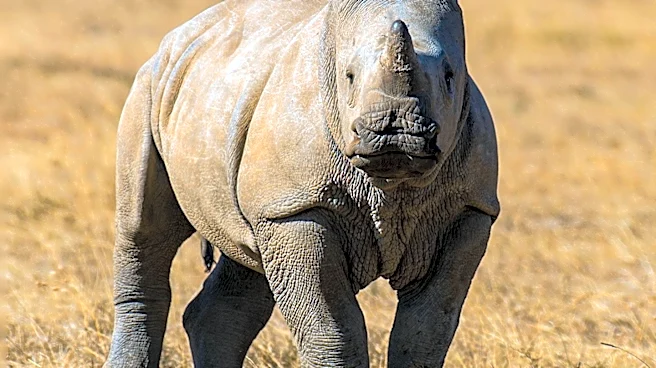
Eliode Bakole, a PhD candidate at Utrecht University, has raised concerns that South Africa's legal rhino horn supply chain could be exploited by criminal networks. Presenting his research at the Global Organised Crime Conference, Bakole highlighted how
legally obtained rhino horns might enter illegal markets through practices like trophy hunting, dehorning, stockpiling, and corruption. He noted that South Africa possesses a significant quantity of rhino horns due to dehorning practices, which some refer to as a 'perfect supply chain.' Bakole questioned the true intentions behind dehorning, suggesting a lack of clear evidence regarding the purpose of keeping detached horns. He pointed out that a kilogram of rhino horn can fetch between $25,000 and $35,000 in Southeast Asian consumer markets, creating a strong financial incentive for illicit activities. The Department of Forestry, Fisheries and the Environment reported that South Africa had an estimated minimum of 15,096 rhinos at the end of 2025, a 4.9% increase from 2024, despite ongoing poaching pressures.
Why It's Important?
This warning is significant because it exposes potential vulnerabilities in conservation efforts and legal frameworks designed to protect endangered species. If legal supply chains are compromised, it could undermine global efforts to combat wildlife trafficking and further endanger rhino populations. The potential for 'green laundering,' where legal activities mask illegal trade, complicates enforcement and makes it harder to distinguish legitimate from illicit operations. This could lead to increased poaching if criminal networks find easier avenues to profit from rhino horns. The economic value of rhino horn in consumer markets creates a powerful incentive for criminal organizations, potentially diverting resources meant for conservation towards illicit gains. The integrity of South Africa's conservation strategies, which include dehorning to deter poachers, could be questioned if these practices inadvertently create opportunities for criminal exploitation.
What's Next?
The concerns raised by Bakole may prompt increased scrutiny of South Africa's rhino horn management practices and regulations. Stakeholders, including conservation organizations, government agencies, and international bodies, might review existing policies on trophy hunting, dehorning, and horn stockpiling to identify and close potential loopholes. There could be calls for greater transparency and accountability in the handling and tracking of legally obtained rhino horns. Further research into the effectiveness of current anti-laundering measures and the motivations behind dehorning practices may also be initiated. International cooperation to combat wildlife crime, particularly in consumer markets in Southeast Asia, could be strengthened to disrupt the demand side of the illegal trade. The future of South Africa's substantial rhino horn stockpiles will likely remain a contentious issue, with ongoing debates about their management and potential impact on both legal and illegal markets.
Beyond the Headlines
The issue extends beyond immediate conservation concerns, touching upon broader ethical and governance challenges. The debate over dehorning for conservation versus potential profit highlights a complex ethical dilemma where practices intended to protect animals might inadvertently create new avenues for exploitation. This situation also underscores the challenges of regulating high-value natural resources, where economic incentives can easily corrupt systems. The concept of 'purpose laundering,' where the true motives behind activities like dehorning are obscured, points to a deeper issue of transparency and integrity within conservation efforts. Furthermore, the potential for theft from stockpiled horns and manipulated reporting suggests systemic vulnerabilities that could erode public trust in conservation authorities. This scenario reflects a global struggle to balance economic interests, conservation goals, and the fight against organized crime in the context of endangered species.