




What's Happening?
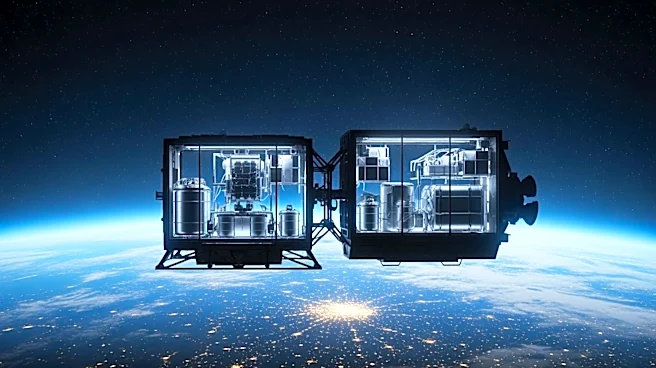
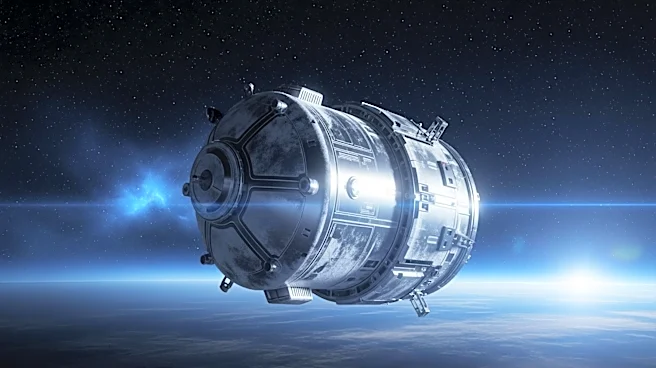
NASA is set to launch the Liquid Oxygen Flight Demonstration (LOXSAT) satellite this summer, a mission designed to test the storage and transfer of super-chilled rocket fuel in zero gravity. This initiative is crucial for future space exploration, particularly
for missions to the Moon and Mars. The LOXSAT mission will address the challenges of managing cryogenic liquids in space, which require freezing temperatures to remain stable. The mission is part of NASA's broader efforts to establish orbital fuel depots that could function as 'gas stations' in space, supporting long-term exploration. The satellite will be launched from Rocket Lab's site in New Zealand aboard an Electron rocket and will conduct a nine-month test run to gather data on cryogenic fuel management.
Why It's Important?
The success of the LOXSAT mission is pivotal for NASA's Artemis program and future Mars missions. Cryogenic fuels, such as liquid oxygen and liquid hydrogen, are essential for the propulsion systems of spacecraft like SpaceX's Starship and Blue Origin's Blue Moon, both of which are contenders for NASA's lunar lander program. These fuels require precise temperature control to remain in liquid form, and their management in space has never been successfully demonstrated. If LOXSAT proves successful, it will provide critical data for developing operational fuel stations in space, enabling spacecraft to refuel mid-journey. This capability is essential for sustainable human presence on the Moon and for future crewed missions to Mars.
What's Next?
NASA is targeting late 2027 for the Artemis 3 mission, which will involve astronauts practicing docking maneuvers with lunar landers. By this time, the LOXSAT mission will have concluded its test run, potentially providing the necessary data for SpaceX and Blue Origin to manage cryogenic fuels in space. The outcome of this mission could significantly influence the timeline and success of NASA's lunar and Mars exploration plans. The development of space-based fuel depots could also open new opportunities for commercial space ventures, furthering the goal of a permanent human presence beyond Earth.