
What's Happening?
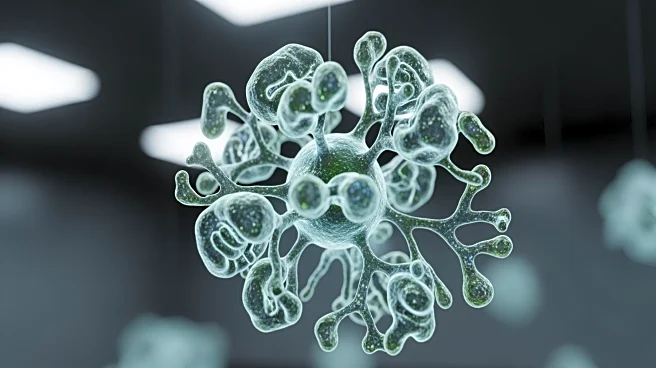
Organoids, miniature organs derived from stem cells, are gaining attention for their potential to mimic human organ functions. However, they currently face limitations, such as the lack of vascular systems
and immature cellular differentiation, which prevent them from being considered complete organs. To overcome these challenges, researchers are focusing on integrating organoids with technologies like microfluidics, 4D bioprinting, and AI-driven maturity control. These advancements aim to enhance the functional completeness of organoids, potentially transforming them into practical therapeutic solutions.
Why It's Important?
The development of organoids holds significant promise for medical research and treatment, offering a sophisticated model for studying diseases and testing drugs. By overcoming current limitations, organoids could become a vital tool in personalized medicine, allowing for more accurate disease modeling and drug testing. This could lead to breakthroughs in treating complex diseases and extending human life. However, the scientific community must manage public expectations and focus on realistic advancements to avoid creating undue hype.
What's Next?
As research progresses, the integration of organoids with advanced technologies could lead to the creation of functional organs for transplantation and disease treatment. Continued innovation in this field may also result in more precise and efficient drug development processes. The convergence of organoid technology with bioprinting and AI could pave the way for new medical applications, potentially revolutionizing healthcare.