






What's Happening?
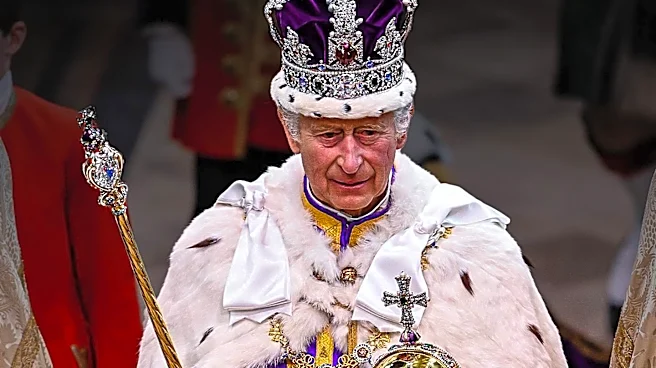
Queen Camilla has disclosed the personal challenge of keeping King Charles III's cancer diagnosis private before its public announcement on February 5, 2024. During a visit to a Maggie's cancer support center at the Royal Free Hospital in London a week
prior to the announcement, Camilla, who has been president of Maggie's since 2008, felt a strong desire to share the news but understood it was not the appropriate time. She expressed that it was "quite difficult" to remain silent, stating, "I almost said something but, you know, I felt that it wasn’t the time say." King Charles III's decision to publicly announce his cancer treatment broke with royal tradition of privacy regarding health matters. Recent updates indicate that the King's health is progressing positively as he continues his cancer treatment.
Why It's Important?
King Charles III's openness about his cancer diagnosis has had a significant public health impact, particularly in encouraging more men to seek testing for prostate cancer and other forms of the disease. According to Maggie's Chief Executive Laura Lee, the number of men visiting the charity's centers has increased by 12% since the King's announcement. This demonstrates the powerful influence of public figures in raising awareness and reducing the stigma associated with serious health conditions. Queen Camilla's personal account further humanizes the experience of dealing with a loved one's illness, potentially fostering greater empathy and understanding among the public. The increased engagement with cancer support services like Maggie's highlights a positive societal response to royal transparency, translating into tangible health benefits for individuals.
What's Next?
The continued public discourse surrounding King Charles III's health and Queen Camilla's reflections on the experience are likely to sustain awareness campaigns for cancer screening and support services. As the King continues his treatment, further updates on his health could reinforce the message of early detection and proactive health management. Organizations like Maggie's may see continued engagement, particularly from men, as the initial surge in interest translates into ongoing support and testing. The royal family's approach to health transparency could also set a precedent for other public figures, potentially leading to a broader cultural shift towards more open discussions about health challenges, ultimately benefiting public health initiatives.
Beyond the Headlines
The royal family's decision to be transparent about King Charles III's cancer diagnosis, and Queen Camilla's subsequent sharing of her personal struggle with keeping it private, delves into the complex interplay between public duty and personal experience. This move challenges historical royal traditions of privacy, signaling a more modern approach to public engagement. It also highlights the ethical considerations surrounding public figures' health, particularly the balance between their right to privacy and the potential public health benefits of disclosure. The impact on cancer awareness and screening rates underscores the significant societal influence of the monarchy, demonstrating how personal health narratives, when shared by prominent figures, can catalyze positive public health outcomes and foster a more open dialogue about illness.